Monday, February 2, 2026

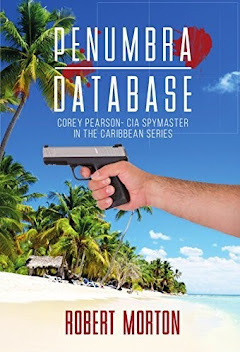
Welcome to the COREY PEARSON- CIA SPYMASTER SERIES!

     Whether you’re looking for a quick, thrilling short-story read or an immersive spy novel to sink into, Corey Pearson's world has something for every adventure lover. Buckle up, explore the world of espionage, and join Corey Pearson on his next mission today! 

COREY PEARSON- CIA SPYMASTER NOVEL SERIESEnter the deadly world of Corey Pearson- CIA Spymaster, where deception is survival and the enemy hides in plain sight in these full-length novels. In Mission of Vengeance, Pearson hunts Russian agents behind a Caribbean massacre. In Shadow War, he uncovers a sleeper cell plot threatening millions on U.S. soil. From covert ops to nuclear threats, these gripping thrillers fuse real spycraft with breakneck action. The line between ally and traitor blurs—and only Pearson’s team can stop the chaos before it’s too late. Then, In Payback, a ruthless assassin is on the loose, murdering young CIA operatives- rising stars handpicked for a secret CIA Mentorship Program.


COREY PEARSON- CIA SPYMASTER SHORT STORY SERIESThese quick, 20-30 minute reads are perfect for spy thriller enthusiasts who crave high-stakes missions packed with real-world espionage and gripping spycraft. Read them in any order and get whisked away into Corey Pearson's daring adventures- devour each one in a single sitting!

Inside the Soviet Union’s Black Projects: Cold War Experiments, Secret Weapons, and Vanished Programs


Cold War Soviet Black Projects Hidden Weapons, Space, and Secret Science

During the Cold War, everyone knew the Soviet Union kept secrets. What most people didn’t grasp was how deep that secrecy ran. Plenty of projects never showed up in parades, newspapers, or official histories. Beyond the famous rockets and fighter jets were programs locked down so tightly that even the engineers building individual components often had no idea what the final product was supposed to be.

     Some of these efforts were daring and imaginative, others dangerously reckless, and a few were just plain strange. When the Soviet system collapsed, many of them vanished with it, leaving behind rumors, half-burned paperwork, and unanswered questions.

     One of the strangest was a quiet Soviet attempt to build its own version of the American Space Shuttle, years before anyone outside the system ever heard about Buran. Deep inside closed facilities, engineers tested a small spaceplane that looked more like a sci-fi prop than a real aircraft. It was launched by rockets, skimmed the edge of space, and then glided back through the atmosphere. In the 1970s, it flew secret suborbital test missions to see how its heat shielding survived and how it handled extreme speeds.

     Officially, none of this was happening. There were no announcements or photos. Decades later, fragments surfaced: a few declassified files, a strange vehicle sitting in a museum with a vague label. Even now, the story feels incomplete.

     Propulsion research was just as murky. Soviet designers experimented with engines that went far beyond standard jets, systems that could run like turbojets at low speed and then transition into ramjet or even scramjet modes as altitude and speed increased. Wind tunnel models and ground test rigs existed, humming away behind locked doors.

     What’s missing is the aircraft itself. No confirmed prototype. No clear photographs. Some historians think this work fed directly into later hypersonic missile programs. Others believe it was simply too complex and quietly abandoned. All that remains are fuzzy sketches and scattered references in once-classified journals hinting at performance that sounds almost unreal for the time.

     The secrecy extended to weapon platforms that pushed into extreme territory. One example was a nuclear-powered cruise missile concept meant to stay airborne for days or even weeks. The logic was simple and terrifying: unlimited range in exchange for massive technical complexity and serious radiation risk. Test reactors were reportedly built, and at least one prototype airframe was considered before the project was buried. Officially, it never existed.

     Weapons in space were another hidden chapter. While the United States openly discussed missile defense, the Soviets quietly tested space stations designed to track, intercept, and possibly destroy satellites. Crews trained under intense secrecy, often unsure how much of their mission would ever be acknowledged. At least one station carried a real cannon modified to work in the vacuum of space. Oversight came from military-linked organizations under the watchful eye of the KGB. To the public, these stations were peaceful research platforms. In reality, they were something far more threatening to U.S. national security.

     Even darker were biological and chemical weapons programs hiding behind civilian research. On paper, these facilities worked on vaccines or industrial chemistry. In reality, some were developing weaponized viruses and nerve agents. Entire towns were erased from maps to keep the work secret. That blend of science and moral free fall feels uncomfortably familiar in the Shadow War spy thriller, where former KGB operatives plan a devastating viral attack in New York City. The plot echoes real Cold War logic, biology treated as just another weapon. In the novel, CIA spymaster Corey Pearson and his team race to stop it in time. In real life, the outcomes were far less clear.

     After the Soviet collapse, the fallout was chaotic. Some scientists finally spoke about what they’d done. Others disappeared into private companies or foreign programs, taking their knowledge with them. What ties all these projects together is how abruptly they ended. By the late 1980s, funding dried up. Prototypes were abandoned, documents destroyed or scattered, and teams dissolved. Designers who once worked under figures like Sergei Korolev, the mastermind behind the early Soviet space program, suddenly found themselves without direction.

     That’s what makes these black projects so unsettling. They show a side of the Cold War that rarely makes it into textbooks. This wasn’t just about keeping up with the West. It was about pushing limits, sometimes recklessly, with little concern for cost, danger, or what might happen down the line.  Secrecy protected these programs while they were alive, and obscurity finished the job after the Soviet Union disappeared. All that remains now are unanswered questions, and the uneasy feeling that some chapters of that era were never meant to be fully understood.


Robert Morton is a member of the Association of Former Intelligence Officers (AFIO) and writes about the U.S. Intelligence Community (IC). He also writes the Corey Pearson- CIA Spymaster Series, which blends his knowledge of real-life intelligence operations with gripping fictional storytelling. His work offers readers an insider’s glimpse into the world of espionage, inspired by the complexities and high-stakes realities of the intelligence community.


Saturday, January 17, 2026

Cold War 2.0? MI6 Mole Hunt Exposes New Threats to Western Intelligence Agencies


Spies Among Us: A Chilling Reminder From Britain's Longest Secret Mole Hunt

     There are stories that make you shake your head in disbelief. And then there are the ones that make your blood run cold. What just surfaced from Britain’s intelligence vaults? Absolutely the latter.

     Somewhere in the bowels of MI5, behind doors few ever pass through, a secret was buried for nearly 20 years. The kind of operation that feels ripped straight from the pages of a spy novel—but it was very real. Codename: Operation Wedlock. The mission? To determine whether one of MI6’s own—a high-ranking British intelligence officer—was quietly working for Russia. Yes, Russia.

     You’d think this was some Cold War relic, but no—this kicked off in the late '90s and ran well into the 2010s. Triggered by a CIA tip, British intelligence launched what may be one of its most sensitive internal investigations since the fall of the Berlin Wall.

     They were chasing a ghost. “Suspect 1A,” as the CIA identified him. A man in the heart of the British intelligence system, allegedly slipping secrets to the Kremlin, possibly under the nose of Vladimir Putin himself—then head of the FSB. Chilling? That's putting it lightly.

     The op was so secretive, MI5 briefed agents inside a church just to avoid detection. Others thought they were on a training exercise—until they left HQ and realized the mission was dead serious. Surveillance units operated from a fake private security firm in South London, quietly observing, gathering, and hoping for a slip-up. They even went so far as to conduct unsanctioned surveillance missions in the Middle East—breaking international law if caught.

     All this effort, all this risk... and in the end? No smoking gun. By 2015, the suspected mole had left MI6. Gone. Vanished into quiet retirement—or something far worse.

     And here’s where the unease should really set in.

     Because this isn’t just a British problem. It’s a global one. In my own spy thriller Shadow War, I wrote about a scenario where former Russian KGB officers infiltrated the highest echelons of American government. A U.S. Senator—Chairman of the Senate Intelligence Committee—compromised. Even the National Security Advisor's office wasn’t safe. Sound far-fetched?   Not anymore.

     Operation Wedlock reminds us: the Cold War may be over on paper, but the espionage games never ended. They just got smarter. More digital. More patient.

     Inside our own U.S. Intelligence Community, we like to think we’ve buttoned things up. But the truth is, spycraft has evolved. Today’s double agents don’t pass microfilm in alleyways—they drop files via secure backchannels or embed malicious code into harmless-seeming emails. They don’t have to be in the room. They just need access.

     Which is why we need to double down on trust—but more importantly, verification. The intelligence community, both in the U.S. and abroad, must treat internal security with the same seriousness we reserve for foreign threats. Every agency needs a robust counterintelligence division—not a token squad, but a full-fledged unit with teeth, capable of rooting out deception in all its forms.

     Because the next "Suspect 1A" may not be sitting in London. They could be right here, inside the very institutions designed to keep us safe.

The silence around Operation Wedlock should be a wake-up call—not a sigh of relief.

     We can't afford to wait 20 years just to come up empty.


Robert Morton is a member of the Association of Former Intelligence Officers (AFIO) and writes about the U.S. Intelligence Community (IC). He also writes the Corey Pearson- CIA Spymaster Series, which blends his knowledge of real-life intelligence operations with gripping fictional storytelling. His work offers readers an insider’s glimpse into the world of espionage, inspired by the complexities and high-stakes realities of the intelligence community.

Friday, January 16, 2026

The KGB Never Died: How Putin’s Old Spy Network Still Shapes Russia Today


Putin’s Spy State: How Former KGB Officers Still Run Russian Intelligence

      A lot of Americans thought the KGB disappeared when the Soviet Union fell apart. One day the hammer and sickle came down, the Cold War ended, and that was supposed to be the end of Moscow’s most feared spy agency. The name vanished, the flags changed, and the uniforms got updated. But the KGB itself never really went away. It just rebranded. Same people, same habits, same way of thinking.

     Today’s Russian intelligence services — the FSB, GRU, and SVR — are basically the KGB under new labels. They inherited the old files, the old spy tricks, and, most of all, the old culture. That culture is built on secrecy, lies, and playing the long game. It’s driven by the belief that the West, especially the United States, is always plotting against Russia. For a lot of former KGB officers, “retirement” didn’t mean walking away. It meant shifting roles. Many of them are still advising, influencing, and quietly helping run Russian intelligence operations today.

    No one represents this carryover from the old KGB world better than Vladimir Putin. Long before he became Russia’s strongman, Putin was a KGB officer working in East Germany. He watched the Soviet empire collapse from the inside, and he didn’t see it as a system that failed. He saw it as a national humiliation brought on by weakness and betrayal. That moment stuck with him, and it still shapes how he sees the world.

     For Putin, intelligence agencies aren’t just about protecting the country. They’re tools for holding power, keeping rivals in line, and pushing Russia’s interests abroad. You can see the old KGB playbook at work in today’s Russia: operations that can be denied, the use of proxies, nonstop disinformation, targeted killings, and long-term efforts to influence other countries. None of this is new or accidental. It’s classic Cold War tradecraft, updated for the internet age.

     Consider Sergei Ivanov, another former KGB officer who rose to become defense minister and later a senior Kremlin official. Or Nikolai Patrushev, who served as FSB director and remains one of Putin’s closest advisors. Patrushev has openly echoed KGB-era conspiracy thinking, blaming Western intelligence services for everything from domestic unrest to global economic instability. These men do not merely remember the KGB. They think like it.

     Then there’s the GRU, Russia’s military intelligence service, which has been tied to everything from cyberattacks to outright assassinations. Take the 2018 poisoning of former Russian spy Sergei Skripal in the UK. It had all the classic KGB fingerprints on it. It was public, unmistakable, and meant to scare anyone else thinking about defecting. The message was simple and brutal: you can run, you can hide, but you’re never really out. In their world, betrayal is never forgiven, no matter how many years go by.

     This persistence of KGB thinking is a central theme in my spy thriller Mission of Vengeance. In the novel, CIA spymaster Corey Pearson tracks a pair of former KGB agents whose Cold War service alongside Putin never truly ended. Though officially retired, they continue operating in the shadows, leveraging old networks and old grudges to carry out modern attacks. The fiction reflects a reality intelligence professionals understand well: spies rarely stop being spies.

     What Mission of Vengeance plays up in fiction is something history backs up. Former Russian intelligence officers are still woven into the Kremlin’s inner circle, shaping decisions at the highest levels. You can see their fingerprints on Russia’s war in Ukraine, on cyber meddling in Western elections, and on efforts to push influence in places like the Caribbean, Africa, and Latin America. It’s the same old Soviet strategy: test American influence around the edges while leaving just enough distance to deny direct involvement.

     The murder at the center of my spy thriller may be made up, but the idea behind it isn’t. The KGB didn’t disappear in 1991. It broke apart, rebranded, and adjusted to the times. Today, its former officers fill Russia’s political leadership, intelligence agencies, and major corporations. They carry with them a Cold War mindset shaped by confrontation and a deep, lasting distrust of the West.

     If you want to understand modern Russia, you have to understand this continuity. When Putin makes a move, he’s not acting just as a president. He’s acting like a former intelligence officer who was trained to expect enemies everywhere and to see compromise as surrender. The agency names may say FSB or GRU now, but the instincts driving them are pure KGB.

     In the world of spies and intelligence, the Cold War never really ended. It just went underground.


Robert Morton is a member of the Association of Former Intelligence Officers (AFIO) and writes about the U.S. Intelligence Community (IC). He also writes the Corey Pearson- CIA Spymaster Series, which blends his knowledge of real-life intelligence operations with gripping fictional storytelling. His work offers readers an insider’s glimpse into the world of espionage, inspired by the complexities and high-stakes realities of the intelligence community.

Tuesday, January 13, 2026

Real CIA Espionage: The Art of Blending In Under Deep Cover


Undercover CIA operative blends in, hiding in plain sight

In the covert world of espionage, creating and maintaining a credible false identity, or "legend," is the cornerstone skill. CIA operatives master this art to seamlessly transition from international missions to blending back into civilian life after returning home in Washington, D.C. Their ordinary roles hide extraordinary feats, serving as school teachers, baristas, or accountants, while their actual tasks lead them through the labyrinth of international intrigue.

     Learning how to live under a fake identity isn’t something you just pick up on the fly. It takes serious training and a lot of imagination. It usually starts with intense workshops that drop operatives into situations that feel uncomfortably real. They work on things like mastering new accents, putting together believable fake paperwork, and getting a solid grip on the politics and culture of the country they’re assigned to.

     Sometimes they’re even placed in a mock foreign town, where they have to live day to day among actors playing locals. The goal is simple: make the new identity feel so natural that it holds up, even when people start asking questions.

     Real spies aren’t just movie characters. People like Valerie Plame and   Antonio J. Mendez show what the job actually looks like when the cameras aren’t rolling. Plame, whose cover was famously blown to the public, spent years quietly carrying out sensitive missions under an assumed identity, all while keeping up the appearance of a normal suburban life. As explored in CIA Spy Living Next Door: Valerie Plame’s Secret Life, her story is a reminder of how thin the line can be between everyday routine and classified danger.

     Then there’s Tony Mendez, a master of disguise with a creative streak that turned out to be a lifesaver. During the Iranian hostage crisis, he helped pull off one of the boldest extractions in CIA history by posing as a Hollywood filmmaker scouting a movie. Using fake scripts, costumes, and pure nerve, he got six Americans out safely. The full story, told in Tony Mendez, the CIA Hero Behind the Movie “ARGO”, reads almost too wild to be true. Together, their experiences show just how much ingenuity, risk, and quiet sacrifice goes into a life lived undercover.

     The intricate cover stories in the Corey Pearson- CIA Spymaster Series capture the complex realities of living dual lives through engaging narratives. Corey and his team expertly integrate their CIA duties with civilian roles that allow them to return from overseas missions and blend effortlessly back into their lives in Washington, D.C.

     Corey, posing as a globe-trotting freelance wildlife photographer, has a facade that supports his intelligence gathering in remote regions. Ana, characterized as a charming independent travel agent, leverages her role to gather critical intel using expansive travel networks. Brad, a tech consultant for nonprofits, bridges the digital domain of espionage with a believable civilian demeanor in the tech scene. Steve and Ashley run a bustling wedding photography business, an occupation that not only keeps them on the move but also masks their covert activities with an air of romance and artistry.

     Meanwhile, Stacey, working as a cybersecurity specialist, uses her expertise to fortify operations while maintaining an air of normalcy. Each member's credible persona enables them to live ordinary lives, securely hiding their true CIA roles while keeping their covert operations masked by their day-to-day interactions.

     Pulling off a believable fake identity isn’t just about learning accents or carrying the right documents. It’s really about understanding how people think and act. Corey Pearson showed exactly how far that skill can go when he posed as a customs official from the Dominican Republic. Dressed in the right uniform and carrying himself with total confidence, he walked straight onto the yacht of a Russian oligarch suspected of plotting a deadly virus attack on U.S. soil. One wrong move could’ve blown everything. The stakes couldn’t have been higher.

     Seen this way, Corey Pearson and his team are a perfect example of how espionage really works. Every operative has to be a chameleon, slipping into carefully built identities that keep them safe and get the job done. Each fake life is put together with purpose, helping protect national security while they walk the tightrope of living two lives at once. The trick is making it all look so natural that no one ever questions it.


Robert Morton is a member of the Association of Former Intelligence Officers (AFIO) and writes about the U.S. Intelligence Community (IC). He also writes the Corey Pearson- CIA Spymaster Series, which blends his knowledge of real-life intelligence operations with gripping fictional storytelling. His work offers readers an insider’s glimpse into the world of espionage, inspired by the complexities and high-stakes realities of the intelligence community.

Sunday, January 11, 2026

The KGB Defector Who Exposed Russia’s Intelligence Playbook and What It Means for U.S. National Security


A Quiet KGB Archivist Revealed Russia's Long Game For Penetrating America

     What stays with me is how real power often slips through the hands of people no one is watching. Vasili Mitrokhin did not look like a threat to the Soviet system. He was a KGB archivist, a quiet bureaucrat trusted with files and records that were never meant to see daylight. That trust was the mistake. For years, he copied secrets by hand, hiding notes under floorboards and in the walls of his dacha. His family had no idea. When the Soviet Union collapsed, he didn’t rush west. He waited. Then, with unsettling calm, he walked into a Western embassy and changed the intelligence balance overnight.

     What Mitrokhin carried out was not trivia or old war stories. It was the operational memory of the KGB itself. Names of agents planted across Europe, details of assassinations, influence campaigns, disinformation operations, and long-term strategies meant to quietly shape other countries from the inside. U.S. intelligence immediately saw this was not about the past. It was a blueprint for how Russian intelligence worked and how it would likely keep working.

     Mitrokhin did not defect for money or attention. He was disillusioned. He had watched repression up close and seen how truth was buried to preserve the illusion of control. That kind of disillusionment is what intelligence officers look for. It signals stress inside an authoritarian system and shows where cracks are forming. U.S. intelligence worries about those cracks not only because they weaken adversaries, but because they reveal how easily fear and loyalty can be weaponized anywhere.

     That theme runs straight through the spy thriller Mission of Vengeance. CIA spymaster Corey Pearson and his elite team confront a former KGB officer who defects for the same reason Mitrokhin did. He cannot stomach how Vladimir Putin’s rebranded security services, the FSB and GRU, revived the old KGB playbook, tightening repression while pretending Russia had moved on. The defector is haunted by how little actually changed, and that moral exhaustion finally pushes him to act.

     One of the most unsettling lessons from Mitrokhin’s files is patience. The spies he exposed lived ordinary lives for decades inside the U.S. They raised families, held normal jobs, and quietly positioned themselves inside trusted institutions. U.S. intelligence still studies those cases because they show how a democracy can be weakened without a single shot fired, simply by exploiting openness and good faith. It’s not flashy. That’s why it works.

     There’s an uncomfortable truth underneath all this. Intelligence officers are trained to follow facts, not political loyalty. When their assessments clash with what leaders want to hear, tension is inevitable. The real danger comes when intelligence is ignored or attacked. U.S. intelligence has worried about this for years because adversaries see it clearly and exploit it. A divided system is easier to manipulate.

     Mitrokhin’s defection exposed not just secrets, but arrogance. The belief that control was absolute. It wasn’t. In Mission of Vengeance, Corey Pearson and his team understand that protecting a defector isn’t just about extracting information. It’s about signaling that America still values truth over convenience.

     That signal matters. Allies and adversaries both watch how the United States treats intelligence professionals and truth tellers. When political loyalty outweighs intelligence assessments and long-term strategy, national security erodes from the inside. Mitrokhin showed how much damage one disillusioned archivist could do to a system built on fear.

     The harder question is whether America will listen to its own intelligence community before warnings turn into hindsight.

Top of Form

Bottom of Form


Robert Morton is a member of the Association of Former Intelligence Officers (AFIO) and writes about the U.S. Intelligence Community (IC). He also writes the Corey Pearson- CIA Spymaster Series, which blends his knowledge of real-life intelligence operations with gripping fictional storytelling. His work offers readers an insider’s glimpse into the world of espionage, inspired by the complexities and high-stakes realities of the intelligence community. 

Tuesday, January 6, 2026

 How the CIA, NSA, and Cyber Command Pulled Off the Capture of Maduro—and What It Means for U.S. Power


A covert night raid that reshaped global power, revealing how U.S. intelligence, special operations, and cyber warfare now define modern national security.

     What stands out to me about the Maduro raid isn’t just that it worked. It’s how deliberately choreographed it was across the entire U.S. intelligence and military system, and what that says about where American power is headed.

     The CIA was the backbone of the operation. This wasn’t a last-minute scramble or a lucky break. Agency officers had spent months quietly building a detailed portrait of Maduro’s movements and personal patterns. They weren’t just tracking locations, they were studying behavior. Where he liked to spend time, how he moved through secure spaces, what kinds of security precautions he relied on, and which ones he ignored. That kind of intelligence only comes from long-term, human-driven collection, and it’s what allowed planners to narrow the window down to a moment when Maduro was exposed enough to be taken alive. Without that work, the rest of the operation would’ve been guesswork.

     At the same time, the NSA was doing what it does best: dominating the electromagnetic space. Communications tied to Venezuelan security forces were closely monitored, giving U.S. planners a real-time sense of when guards were alert, when units were shifting positions, and when internal chatter suggested confusion or delay. That information helped reduce the risk to the assault force by ensuring they weren’t flying blind into a city full of armed loyalists. The operation depended on knowing not just where Maduro was, but what everyone else thought was happening.

     The NGA filled in the physical picture. Using satellite imagery and other sensors, it produced highly detailed maps of the target area, including building layouts and surrounding terrain. Those visuals weren’t academic. They were the difference between operators knowing exactly where they were stepping and having to improvise under fire. When Delta Force moved in, they weren’t encountering surprises. They were executing against a space that had already been studied from every angle.

     Then there was Cyber Command. While the specifics remain classified, it’s clear cyber capabilities were used to disrupt Caracas at a critical moment. Power and communications failures created confusion, slowed response times, and fractured coordination among Maduro’s security forces. That wasn’t collateral damage. It was intentional shaping of the environment, using civilian infrastructure as a pressure point to tilt the odds in favor of the raiding force before helicopters ever touched down.

     All of that intelligence work fed directly into the military action. Delta Force didn’t stumble onto Maduro or chase him through the city. They went straight to him, breached the site before he could reach a hardened safe room, and extracted him quickly. It was a precision strike enabled by years of investment in intelligence integration and interagency cooperation.

     What troubles me isn’t the competence. It’s the precedent. This was a sovereign leader captured through a blend of espionage, cyber disruption, and special operations. That’s not traditional counterterrorism. It’s a form of targeted regime intervention, and once you demonstrate you can do it, you implicitly argue that it’s acceptable. Other powers won’t hesitate to adopt the same logic, even if their targets and values look nothing like ours.

     For America’s national security, the risk is escalation by imitation. For the intelligence community, the risk is mission creep, where collecting information becomes inseparable from executing political outcomes. And for democratic values, the danger lies in how quietly these capabilities can be used without sustained public debate.

     If the United States wants to preserve long-term strategic stability and moral credibility, it has to decide whether operations like this are exceptional or whether they’re becoming the new normal. That choice will shape not just how others see us, but how we see ourselves.


Robert Morton is a member of the Association of Former Intelligence Officers (AFIO) and writes about the U.S. Intelligence Community (IC). He also writes the Corey Pearson- CIA Spymaster Series, which blends his knowledge of real-life intelligence operations with gripping fictional storytelling. His work offers readers an insider’s glimpse into the world of espionage, inspired by the complexities and high-stakes realities of the intelligence community.