
 |
| Cold War Arctic CIA Mission Secrets Uncovered On Ice |
In spring 1962, somewhere out on the
Arctic ice, the Soviets left behind something they clearly hadn’t meant anyone
else to see. It was called North Pole-8, or NP-8, one of the USSR’s drifting
ice stations, officially a scientific outpost set on a floating slab of polar
ice. On paper, it looked harmless enough. Weather readings. Research. Arctic
routine. But when American intelligence caught wind of the station’s sudden
abandonment, alarm bells started ringing. This didn’t look like the kind of
place you just walk away from unless the ice is breaking beneath your feet, or
unless what’s inside matters a whole lot.
The whole scene sounds made up. A camp
stranded on a drifting sheet of ice. Antennas frozen solid. Gear half-buried
under snow and jagged pressure ridges. No dock. No runway. No easy way in, and
definitely no simple way out. The Soviets had reportedly abandoned NP-8 in
March 1962 after its ice runway was damaged, making resupply impossible. That
left the station sitting out there like a sealed envelope in the middle of
nowhere. For the CIA and the Office of Naval Research, that was just too
tempting. They had a hunch the station was doing more than logging weather
notes. What they really wanted to know was whether the Soviets were using these
drifting bases to track American submarines under the polar ice.
So US intelligence came up with a plan
that sounds less like history and more like the kind of thing you’d find in a
thriller. Two men, Major James Smith and Lieutenant Leonard LeSchack, were
parachuted onto the abandoned station on May 28, 1962. Their ride in was a
modified CIA B-17 Flying Fortress, piloted by Connie Seigrist and Douglas
Price. The job was brutally simple: search the base, gather whatever mattered,
and survive long enough to be pulled back out of the Arctic void.
And the extraction? This is where it gets
truly wild. They used the Fulton Skyhook system, a device so nerve-shredding it
still sounds insane even now. The men clipped into harnesses attached to lines
that rose into the air, and the B-17 flew in low with giant fork-like prongs
mounted on its nose to snag the tether. Then, in a violent jerk, the person on
the ground was yanked skyward and reeled aboard. No runway. No landing. Just
ice, wind, nerve, and timing. In Project COLDFEET, it worked.
What they uncovered made all that danger
worth it. Buried in that frozen station was evidence of serious Soviet acoustic
research, including work on how to detect U.S. submarines moving under the
Arctic ice and anti-submarine warfare techniques to neutralize them. So NP-8
wasn’t just some forgotten weather camp that got chewed up by bad luck. It was
part of the Cold War’s darker game, where even a sheet of ice could turn into a
battlefield.
The CIA is still revisiting the story
today. In March 2026, it published a fresh look back at the Skyhook system and
called Operation COLDFEET an intelligence coup. That says a lot.
Honestly, this whole thing has the same
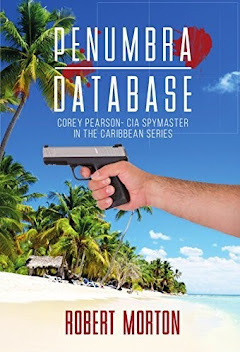
pulse as the Corey
Pearson- CIA Spymaster Series, where Corey Pearson and his elite
CIA team are always taking risky modern-day missions that most people would
call impossible. Only this one was real. And maybe that’s the eeriest part of
all. Out on a drifting sheet of Arctic ice, with the world nowhere in sight,
the Cold War briefly turned into something stranger than fiction.
Robert Morton is a member of the Association of Former Intelligence Officers (AFIO) and writes about the U.S. Intelligence Community (IC). He also writes the Corey Pearson- CIA Spymaster Series, which blends his knowledge of real-life intelligence operations with gripping fictional storytelling. His work offers readers an insider’s glimpse into the world of espionage, inspired by the complexities and high-stakes realities of the intelligence community.


No comments:
Post a Comment