
 |
| The Spy Wars You Don't See- Intelligence Ops Stop Catastophes Before They Start |
Most of us think of
spies as movie characters. Slick, impossible, living in a world that has
nothing to do with our daily routines. But real espionage has always been
messier, riskier, and far closer to home than we like to admit. A lot of what
keeps planes flying, power grids humming, and cities safe depends on people
we’ll never know making hard calls in the dark.
History is full of real spies who pulled
off things that still sound unreal. Take Virginia Hall. She had a prosthetic
leg and still became one of the Allies’ most effective agents in World War II.
Or Juan Pujol García, a Spaniard who convinced the Nazis he was on their side
while quietly feeding them lies that helped throw off German forces on D-Day.
These people weren’t action heroes. They were regular humans living under
nonstop pressure, knowing a single slip could cost them everything.
Some spies helped stop wars before they
started. Others helped end them faster. And some paid the ultimate price. Eli
Cohen worked his way deep into Syria’s inner circle in the 1960s, gathering
intelligence that reshaped Israel’s military plans. Oleg Gordievsky, a
high-ranking KGB officer secretly working for Britain, tipped off the West when
the Cold War came terrifyingly close to going nuclear.
What tied all those spies together wasn’t
style or swagger. It was guts. Patience. And a clear understanding that even a
tiny slip of information could get people killed.
That still holds true today, even though
the gear looks different. Espionage isn’t about trench coats and microfilms
anymore. It’s about satellites, drones, data streams, and signals shooting
around the world in seconds. When someone breaks into those systems, the damage
doesn’t stay locked inside some secret briefing. It spills out, affecting
borders, warning systems, and how ready a country is when trouble hits.
That’s why spy stories aren’t just fun
distractions. They’re reminders of what’s really on the line.
There’s a moment in my spy thriller Ghost Signal
where a U.S. spy drone doesn’t explode or get shot down. It simply drops out of
the sky, like someone pulled the plug on gravity. CIA spymaster Corey Pearson
and his team stare at the wreckage in a sealed safe house, watching a tiny
diode blink back to life. The drone is dead, but the signal isn’t. Someone
hijacked it mid-flight and walked away clean.
That scene hits close to reality.
Governments and criminal networks alike have shown they can hijack drones,
spoof GPS signals, and manipulate communications systems. When that happens,
it’s not just military hardware at risk. Commercial aviation, emergency
services, shipping lanes, even your phone’s navigation system rely on the same
infrastructure.
Real spies have always known how to take
advantage of that access. Back in the Cold War, that meant sneaking out
blueprints and codes that shifted the global balance. Today, it’s quieter. An
insider slips malware into a secure system or quietly feed adversaries
information that weakens and pokes holes in defenses. The best spies don’t
cause explosions. They leave damage you don’t notice until it’s too late.
There’s a moment in Ghost Signal where
Corey’s team traces a hijacked signal to a luxury yacht cruising through the
Caribbean. Champagne on deck. Shell corporations on paper. And just enough
antennas hidden in plain sight to turn the whole boat into a floating relay
station. It sounds ridiculous until you realize how effective it is.
That’s uncomfortably close to real life.
Espionage often hides behind normal-looking businesses, research labs, or tech
companies. The real threat isn’t only what gets stolen. It’s what those
operators learn about how a country protects itself.
For everyday readers, this isn’t about
paranoia. It’s about awareness. Prevention usually happens quietly. When it
works, nothing happens.
And that’s the real legacy of daring
spies. Not the drama, but the disasters you never hear about because someone
caught a signal blinking when it shouldn’t have been.
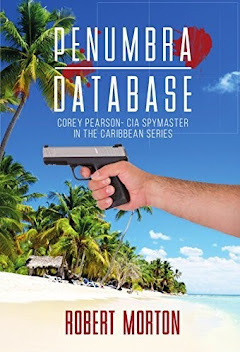
Robert Morton is a member of the Association of Former Intelligence Officers (AFIO) and writes about the U.S. Intelligence Community (IC). He also writes the Corey Pearson- CIA Spymaster Series, which blends his knowledge of real-life intelligence operations with gripping fictional storytelling. His thrillers reveal the shadowy world of covert missions and betrayal with striking realism.


No comments:
Post a Comment