

A
modern CIA analyst doesn’t show up to work like they do in the movies. No
trench coats, no ringing red phones. Most days start with bad coffee, low
lights, and a wall of screens already full of overnight alerts. Buried
somewhere in all that noise is one detail that doesn’t quite fit. Spotting that
is where the real work begins.
At the Central Intelligence Agency,
intelligence today is a partnership between people and machines. Human
intelligence still matters just as much as it ever did. You still need to
understand why a source is talking, trust a case officer’s instincts, and rely
on an analyst’s judgment to connect the dots. What’s changed is the volume. There’s simply
too much information for humans to process alone, so AI now does the first
sweep. It translates, summarizes, scans for odd patterns, and flags anything
that looks off. Analysts decide what’s real and what’s worth chasing.
In Ghost
Signal, that moment comes when a U.S.
surveillance drone drops out of the sky without warning. This isn’t a cheap or
disposable aircraft. It’s a high-altitude, long-endurance system packed with
encrypted communications, redundant controls, and advanced sensors. It watches,
listens, and feeds intelligence back through satellites in real time.
Then it simply stops responding. No
explosion. No missile trail. It veers off course and vanishes from the network,
like someone flipped a switch. That’s when alarms go off. Mechanical failures
don’t look like that.
So when Stacie appears on the screen from
NSA headquarters, hair tied back and eyes locked on her monitors, there’s a
reason everyone listens. She’s a CIA asset planted inside the NSA, quietly
embedded where the data is thickest and the tools are most powerful. She
doesn’t waste time. She says she’s running analysis. That’s realistic. When a
high-end U.S. drone is lost under strange circumstances, nobody wants drama.
They want answers.
The first question is always the same: was
this random, or did someone do it on purpose? That distinction changes
everything. AI starts tearing through data from the drone’s final moments,
looking for anything out of place. Repeating signals. Strange timing. Patterns
that don’t belong. Machines are great at spotting those details.
Stacie’s call that the signal wasn’t
random but an encrypted burst firing every eight seconds is exactly how this
works. The system flags the anomaly. The analyst interprets it. When she says
the drone wasn’t jammed but taken over, that’s human judgment. And it reframes
the whole incident. This wasn’t interference. It was sabotage.
From there, intelligence becomes a fusion
problem. Signals alone aren’t enough. Satellite imagery alone doesn’t explain
intent. Human reporting fills in the gaps. As Stacie tracks the signal bouncing
through Havana, Jamaica, and then somewhere moving at sea, she’s narrowing the
problem the way CIA analysts do every day. Machines crunch the math. Humans
recognize what matters.
That leads to satellites being tasked to
look at one specific patch of ocean. When the feed locks onto a white yacht
cutting through dark Bahamian waters, it isn’t luck. It’s the system working.
Now there’s something concrete the team on the ground can act on.
This is where context beats computing
power. A satellite can show antennas on a deck. It can’t tell you who owns the
yacht or why it matters. That comes from digging through records, shell
companies, and human reporting. Stacie tying the vessel back to a Russian
oligarch named Orlov isn’t a big reveal. It’s a lot of small pieces snapping
together.
From there, intelligence drives action.
Analysts don’t board the yacht, but they shape every move leading up to it.
They track speed, heading, and timing. When Stacie overlays the route and
estimates how long the team has before the yacht reaches port, she’s giving
them an edge, not certainty.
All the while, AI keeps humming in the
background, updating models and watching for changes. But the big calls still
belong to humans. The machines assist. People decide.
And when the shift ends, no one thinks the
story is finished. There are always loose threads. Was this a one-time attack
or a rehearsal? Who else can do this? What haven’t we seen yet?
That uncertainty is the real texture of
modern intelligence work. It’s quieter than the movies, faster than it used to
be, and built on collaboration. In Ghost Signal, Stacie
isn’t powerful because she controls technology. She’s powerful because she
knows how to turn information into understanding and get it to the people who
need it before time runs out.
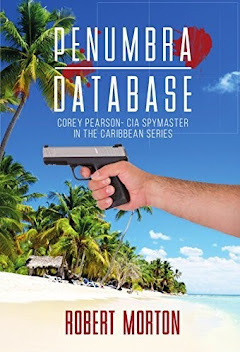
Robert Morton is a member of the Association of Former Intelligence Officers (AFIO) and writes about the U.S. Intelligence Community (IC). He also writes the Corey Pearson- CIA Spymaster Series, which blends his knowledge of real-life intelligence operations with gripping fictional storytelling. His thrillers reveal the shadowy world of covert missions and betrayal with striking realism.


No comments:
Post a Comment