

 |
| Trump views a PDB intelligence update as national security decisions loom |
If you
follow politics even casually, you might’ve caught a Politico headline that
slipped by with barely a ripple: President Trump has sat for only 12 “daily”
intelligence briefings since taking office. Twelve. In roughly 100 days. That’s
not just a scheduling quirk. It’s a red flag.
At first, it almost sounded like a
technicality. But the more I thought about it—and the more I compared it to the
world I write in—the more it stopped feeling like policy and started feeling
personal.
Because the Presidential Daily Brief (PDB)
isn’t just paperwork. It’s the frontline defense between Americans and the next
national crisis.
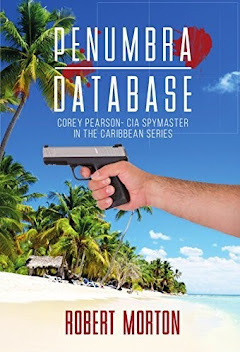
In the Corey
Pearson – CIA Spymaster Series, the PDB is treated like what it
truly is: a weapon against surprise. One of the most gripping scenes in the
series has Corey walking into the Oval Office beside the CIA Director to brief
President Rheinhart. It’s not a photo-op or a stiff routine. It’s strategic.
Urgent. Life-and-death.
The fictional PDB they lay on the desk is
lean—no fluff, no noise, no half-baked theories. It’s a distilled threat map of
the world, with Corey interpreting signals that others missed. Signals pulled
from HUMINT assets, satellite intel, cyber activity, and historical patterns.
The CIA Director doesn’t sugarcoat a thing. Rheinhart listens, interrupts,
challenges, and questions—because real leadership engages with real threats.
That scene might be fictional. But the
principles behind it are not.
For decades, every American president has
relied on the PDB to understand the world’s most pressing threats—foreign
military moves, espionage networks, terrorism chatter, cyber intrusions,
hostile influence campaigns. Stuff you and I will never see—but stuff we
absolutely depend on someone reading.
Which is why Trump’s disinterest in the
PDB is more than just unconventional. It’s reckless.
Instead of the in-person briefings that
prior presidents prioritized—think Reagan, both Bushes, Clinton,
Obama—reporting suggests Trump preferred visuals, short summaries, and minimal
engagement. No depth. No context. Often, no direct briefing at all. As if
complex global threats could be handled like a PowerPoint deck.
Meanwhile, in the fictional world I write,
those same threats are taken seriously enough to justify covert action. That
trust—between the intelligence community and President Rheinhart—is what
prevents wars, stops attacks, and saves American lives before anyone even knows
they were at risk.
Here in the real world? Threats don’t
pause just because someone’s too busy for a meeting. Russia’s war machine
grinds forward. China plays the long game in tech and territory. Iran tests
boundaries. Cyber threats evolve daily. These aren’t cable news plotlines. They
shape fuel prices, hack elections, trigger supply chain chaos, and shake
military readiness.
And it’s not just about being
"informed." It’s about being prepared. You can’t lead a country on
instinct alone. Intelligence matters. Systems matter. The analysts behind those
briefings? They’ve spent entire careers learning how to detect lies, connect
dots, and flag subtle patterns before they explode into chaos.
When President Rheinhart in my Corey Pearson – CIA Spymaster
Series challenges an intel briefing, it’s not because he doubts the
CIA—it’s because he wants to understand the risk deeper. Because decisions only
get better when the people making them actually show up for the hard
conversations.
That’s why the contrast matters so much.
Because when the real-world commander-in-chief skips that briefing—or treats it
like background noise—it sends a message. To adversaries, it looks like
distraction. To allies, it looks like disengagement. And to career intelligence
professionals who have dedicated their lives to keeping this country safe, it
feels like betrayal.
And honestly? It’s not theoretical.
We’ve already seen what happens when
intelligence warnings are brushed aside. Think 9/11. Think election
interference. Think massive data breaches that exposed millions. In most of
those cases, it wasn’t that the intelligence didn’t exist. It was that it wasn’t
taken seriously enough.
I keep imagining a moment—one that’s all
too plausible—where an urgent warning about an attack or cyber strike sits
unopened. Not because the system failed, but because someone at the top chose
not to read it.
In my fiction, that’s the moment Corey
Pearson goes straight to the Oval, no appointment needed. Because the stakes
are too high. Because the President demands answers. Because in that universe,
the PDB isn’t paperwork. It’s prevention.
And maybe that’s why I write it that way.
Because that’s the leadership I want to imagine.
Not every problem can be solved by spies
and satellites. But if we’re going to face what’s out there, we need leaders
who listen to the people trained to see it coming.
If that kind of behind-the-scenes
intelligence drama hits a nerve with you, you’re not alone. Sometimes, fiction
gives us the space to explore what the real world could—and should—look like.
Robert Morton is a member of the Association of Former Intelligence Officers (AFIO) and writes about the U.S. Intelligence Community (IC). He also writes the Corey Pearson- CIA Spymaster Series, which blends his knowledge of real-life intelligence operations with gripping fictional storytelling. His thrillers reveal the shadowy world of covert missions and betrayal with striking realism.


No comments:
Post a Comment