
 |
| From Spy Thriller to Reality- The CIA and Delta Force Took Down Maduro |
What struck me about the capture of Nicolás
Maduro and his wife wasn’t the shock value. It was how cleanly the operation
itself came together, even as the aftermath looks ill-planned at best and
completely uncertain at worst. God knows what the next few months are going to
bring politically and diplomatically, but setting that aside, this was not a
symbolic strike or a warning shot.
Nevertheless, Maduro was a ruthless and
violent dictator who ruled through fear, corruption, and force, and this was a
deliberate choice to reach into a protected space, seize a sitting head of
state, and put him on a plane bound for the United States to face trial. You
don’t take a risk like that unless you’re convinced the intelligence is solid
and the operators on the ground can execute without hesitation or
second-guessing.
From everything that’s come out, the CIA
had been grinding away at this long before anyone heard a rotor blade in the
air. They followed Maduro’s routines, figured out how his compound really
worked, and had someone close enough to his inner circle to know exactly where
he’d be at a specific moment. You don’t get that from a satellite photo. You
get it from people on the inside, people who wake up every day knowing one
wrong move could get them killed, and from analysts who can separate real
signals from bad chatter. By the time the go-order came down, no one was still
asking if Maduro was there. The only question left was how quickly U.S. forces
could get in, grab him, and get out.
That’s when Delta Force steps in, and
that’s when all the planning turns real. These guys didn’t show up to scare
anyone or make a point. They showed up to put hands on the target. Before dawn,
with strikes hitting around Caracas to keep things off balance, they hit the
compound hard, pushed through resistance, and took both Maduro and his wife
into custody. There were no talks and no waiting around. Everyone involved knew
exactly what the job was, and it was carried out fast and forcefully, with zero
room for doubt about how it was going to end.
What matters to me is that this wasn’t a
loose collaboration. It was a handoff. Intelligence built the target. Delta
Force closed it. That division is intentional. Delta’s entire selection and
training pipeline is designed around making decisions under extreme stress,
clearing rooms with hostages present, breaching fortified structures, and
adapting when the plan breaks on first contact. These are people trained to
move through chaos without freezing, because freezing gets someone killed. When
they went through that compound, they weren’t improvising from scratch. They
were applying a system that’s been refined across decades of hostage rescues,
manhunts, and counterterrorism raids.
There’s no way around it, an operation
like this comes with a political bill, and anyone saying otherwise isn’t being
straight. Dragging a foreign leader out of his own country sends a message that
travels fast and far. It tells enemies that a title and a border won’t save
them, and it tells allies that the U.S. will move when it thinks the stakes are
high enough. But that kind of muscle only works if it’s used carefully and
backed by real credibility. Get the call wrong, trust bad intelligence, and the
backlash wouldn’t just be loud, it would be brutal.
This tension between precision and
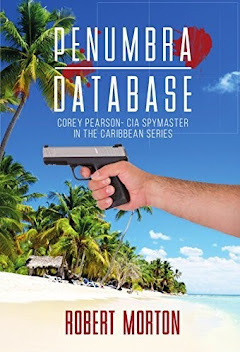
consequence is something I explore in my Corey Pearson CIA Spymaster Series.
Corey and his team often operate in spaces where the U.S. cannot afford to be
seen, and when their covert work goes sideways, the CIA’s Special Activities
Center (SAC) steps in with operators who often come from Delta Force
backgrounds. The dynamic is the same. Intelligence identifies the threat. SAC
provides the muscle when diplomacy and deniability collide. It’s not about
heroics. It’s about containment.
What the Maduro operation really drives
home is how tightly the CIA and Delta Force are tied together when things turn
dangerous on the ground. CIA officers are often out front, running sources,
moving quietly, and pushing missions as far as they can without lighting a
fuse. But when a situation starts to unravel or turns lethal, Delta Force is
the backstop. They don’t kick doors for the sake of it. They show up because
the intelligence says the target is real and the people on the ground need
immediate, decisive backup. The CIA takes risks because it knows there’s a last
line behind them that can step in fast and finish the job.
That’s why this dynamic shows up so
clearly in the Corey Pearson books. Corey survives not because his plans are
perfect, but because when everything goes sideways, SAC operators with Delta
Force backgrounds arrive to pull his team out of the fire. They’re not
invincible. They’re just disciplined, ruthless about the mission, and fully
aware of what failure would mean for the people they’re there to protect.
In
the end, America’s national security rests on this quiet bond between the CIA
and Delta Force working the way it’s supposed to. When intelligence officers
build a clear, reliable picture and SAC and Delta Force operators move fast and
decisively, missions get done with precision and Americans stay out of harm’s
way, often without ever knowing how close the danger really was.
That partnership is one of the country’s
greatest strengths. But it only holds if U.S. leaders think beyond the raid
itself. Taking down ruthless, despotic figures is one thing. Failing to plan
for what comes next is another. Without serious attention to the political
aftermath, even the cleanest operation can open the door to instability and
blowback. Let’s hope Venezuela doesn’t turn into chaos as a result.
Robert Morton is a member of the Association
of Former Intelligence Officers (AFIO) and writes about the U.S. Intelligence
Community (IC). He also writes the Corey Pearson- CIA Spymaster
Series, which blends his knowledge of real-life intelligence operations
with gripping fictional storytelling. His work offers readers an insider’s
glimpse into the world of espionage, inspired by the complexities and
high-stakes realities of the intelligence community.


No comments:
Post a Comment