
 |
| Cold War Soviet Black Projects Hidden Weapons, Space, and Secret Science |
During
the Cold War, everyone knew the Soviet Union kept secrets. What most people
didn’t grasp was how deep that secrecy ran. Plenty of projects never showed up
in parades, newspapers, or official histories. Beyond the famous rockets and
fighter jets were programs locked down so tightly that even the engineers
building individual components often had no idea what the final product was
supposed to be.
Some of these efforts were daring and
imaginative, others dangerously reckless, and a few were just plain strange.
When the Soviet system collapsed, many of them vanished with it, leaving behind
rumors, half-burned paperwork, and unanswered questions.
One of the strangest was a quiet Soviet
attempt to build its own version of the American Space Shuttle, years before
anyone outside the system ever heard about Buran. Deep inside closed
facilities, engineers tested a small spaceplane that looked more like a sci-fi
prop than a real aircraft. It was launched by rockets, skimmed the edge of
space, and then glided back through the atmosphere. In the 1970s, it flew
secret suborbital test missions to see how its heat shielding survived and how
it handled extreme speeds.
Officially, none of this was happening.
There were no announcements or photos. Decades later, fragments surfaced: a few
declassified files, a strange vehicle sitting in a museum with a vague label.
Even now, the story feels incomplete.
Propulsion research was just as murky.
Soviet designers experimented with engines that went far beyond standard jets,
systems that could run like turbojets at low speed and then transition into
ramjet or even scramjet modes as altitude and speed increased. Wind tunnel
models and ground test rigs existed, humming away behind locked doors.
What’s missing is the aircraft itself. No
confirmed prototype. No clear photographs. Some historians think this work fed
directly into later hypersonic missile programs. Others believe it was simply
too complex and quietly abandoned. All that remains are fuzzy sketches and
scattered references in once-classified journals hinting at performance that
sounds almost unreal for the time.
The secrecy extended to weapon platforms
that pushed into extreme territory. One example was a nuclear-powered cruise
missile concept meant to stay airborne for days or even weeks. The logic was
simple and terrifying: unlimited range in exchange for massive technical
complexity and serious radiation risk. Test reactors were reportedly built, and
at least one prototype airframe was considered before the project was buried.
Officially, it never existed.
Weapons in space were another hidden
chapter. While the United States openly discussed missile defense, the Soviets
quietly tested space stations designed to track, intercept, and possibly
destroy satellites. Crews trained under intense secrecy, often unsure how much
of their mission would ever be acknowledged. At least one station carried a
real cannon modified to work in the vacuum of space. Oversight came from
military-linked organizations under the watchful eye of the KGB. To the public,
these stations were peaceful research platforms. In reality, they were
something far more threatening to U.S. national security.
Even darker were biological and chemical
weapons programs hiding behind civilian research. On paper, these facilities
worked on vaccines or industrial chemistry. In reality, some were developing
weaponized viruses and nerve agents. Entire towns were erased from maps to keep
the work secret. That blend of science and moral free fall feels uncomfortably
familiar in the Shadow War
spy thriller, where former KGB operatives plan a devastating viral attack in
New York City. The plot echoes real Cold War logic, biology treated as just
another weapon. In the novel, CIA spymaster Corey Pearson and his team race to
stop it in time. In real life, the outcomes were far less clear.
After the Soviet collapse, the fallout was
chaotic. Some scientists finally spoke about what they’d done. Others
disappeared into private companies or foreign programs, taking their knowledge
with them. What ties all these projects together is how abruptly they ended. By
the late 1980s, funding dried up. Prototypes were abandoned, documents
destroyed or scattered, and teams dissolved. Designers who once worked under
figures like Sergei Korolev, the mastermind behind the early Soviet space
program, suddenly found themselves without direction.
That’s what makes these black projects so
unsettling. They show a side of the Cold War that rarely makes it into
textbooks. This wasn’t just about keeping up with the West. It was about
pushing limits, sometimes recklessly, with little concern for cost, danger, or
what might happen down the line. Secrecy
protected these programs while they were alive, and obscurity finished the job
after the Soviet Union disappeared. All that remains now are unanswered
questions, and the uneasy feeling that some chapters of that era were never
meant to be fully understood.
Robert
Morton is a member of the Association of Former
Intelligence Officers (AFIO) and writes about the U.S. Intelligence Community
(IC). He also writes the Corey
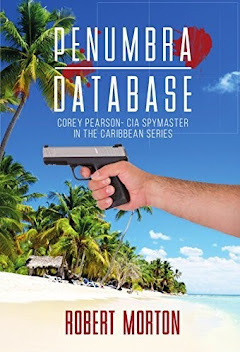
Pearson- CIA Spymaster Series, which blends his knowledge of real-life
intelligence operations with gripping fictional storytelling. His work offers
readers an insider’s glimpse into the world of espionage, inspired by the
complexities and high-stakes realities of the intelligence community.


No comments:
Post a Comment