
 |
| Mexico Cartel Violence Escalates Amid Border Security Crisis |
A lot of people think taking out a guy
like that means the problem just got smaller. Usually, it doesn’t. Most times
it blows the lid clean off. The roadblocks, the cars set on fire, whole areas
frozen in place, that’s not random chaos. That’s a statement. It’s the cartel
saying, we’re still here, and we can shut this place down whenever we feel like
it. We can block highways, box in families, stall businesses. That’s not just
violence. It’s a show of force, proving they can flex power in daylight and make
the government look like it’s scrambling.
The danger multiplies when succession is
contested. A single boss, however ruthless, can impose order. Remove him and
rivals test each other. They prove credibility through escalation. They recruit
harder, intimidate more openly, and punish disloyalty in public. Tourist
corridors and business hubs don’t get immunity. They become leverage. The
message is simple: if we can freeze a city, we can touch anything.
This is the part that keeps people in the
intelligence world up at night. They’re not just glancing at travel warnings.
They’re digging into what happens when the chain of command snaps. Who grabs
the routes? Who controls the guns? What alliances start forming across the
border? Splinter groups can be jumpier and more violent than the boss who held
them together. And outsiders may see chaos as an opening. When a power seat
goes empty, somebody lunges for it.
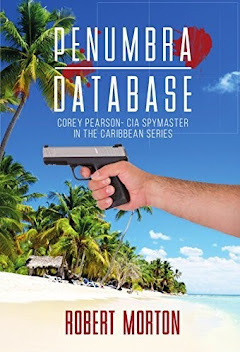
I see that same pressure play out in my Corey Pearson- CIA Spymaster Series.
Corey Pearson and his CIA team know the loud explosion is only the opening act.
What matters is what moves in the shadows after the blast fades. When control
cracks, new players edge in and test limits. That quiet reshuffling of power
keeps intelligence pros on edge, because by the time others notice, the balance
has changed.
Here’s the uncomfortable part. We like to
treat cartel violence as something that happens “over there,” a problem that
matters only when it ruins a beach trip. But the same crews that shut down
highways in Mexico move drugs into our cities, wash cash through global banks,
and squeeze towns along our border. When a cartel can flip a switch and freeze
major roads to make a point, that’s proof of capability. And capability like
that doesn’t stop at a line on a map.
The real trouble starts when hard
intelligence slams into politics. Straight talk from analysts is rarely
convenient. It complicates trade, muddies diplomacy, and doesn’t fit campaign
talking points. The temptation is to soften it or pretend everything’s steady.
But when leaders treat intelligence like it needs to pass a loyalty test, they
confuse optics with strategy. That’s how problems grow teeth. Not because we
didn’t see them, but because we chose not to look.
In the Corey Pearson- CIA Spymaster Series,
one brutal attack blows apart the tidy story leaders want to tell, and suddenly
they’re staring at intelligence they can’t spin away. Corey Pearson and his
team operate where facts clash with politics. That’s the squeeze we’re seeing
here. The issue isn’t whether cartels are dangerous. We know they are. The real
question is whether we’ll treat their growing power as a serious, long-term
national security threat, or just another headline that fades.
This is bigger than one dead kingpin. When
criminal outfits can flex muscle, scare officials, and choke off trade routes,
they’re daring democratic governments to prove they’re still in charge. If
leaders put party loyalty or short-term headlines ahead of straight
intelligence, we give ground.
National security only works when we deal
with the world as it is, not the version we’d prefer to sell. The second we kid
ourselves, the people who live off chaos gain the upper hand.
Robert
Morton is a member of the Association of Former
Intelligence Officers (AFIO) and writes about the U.S. Intelligence Community
(IC). He also writes the Corey
Pearson- CIA Spymaster Series, which blends his knowledge of real-life
intelligence operations with gripping fictional storytelling. His work offers
readers an insider’s glimpse into the world of espionage, inspired by the
complexities and high-stakes realities of the intelligence community.


No comments:
Post a Comment