
 |
| Iran sleeper threats inside America demand urgent counterintelligence vigilance |
Two family members of the late Iranian commander Qasem Soleimani have been taken into custody in the United States after the government canceled their green card status. The State Department said Hamideh Soleimani Afshar and her daughter are being held by ICE and could be deported. Marco Rubio said he personally pulled their legal resident status, and officials also said Afshar’s husband is no longer allowed to enter the country.
The government says Afshar openly
supported Iran’s regime and used social media to push messages that lined up
with Tehran’s interests. Officials have not released the names of her daughter
or husband, but they made it clear this was not being handled like some
ordinary immigration case. In their view, this was a national security issue.
Rubio also argued online that the two women had been living well in the United
States while still being tied to a regime that Washington considers a serious
enemy.
That is what makes this more than just
another story about visas or immigration forms. It raises a tough question the
United States cannot afford to ignore: how open should this country be to
people with close family ties to top figures in enemy governments or
terrorist-linked power networks? That does not mean blaming someone for their
ancestry, and it should never mean treating people as threats just because of
their name or bloodline.
But it does mean U.S. counterintelligence
and counterespionage agencies need to stay on guard when someone living in
America has direct family ties to officials connected to hostile regimes,
especially when there are warning signs like open ideological support,
propaganda work, or unusual access.
That kind of scrutiny matters because
modern espionage rarely looks like an old spy movie. It often operates through
family networks, influence channels, soft access, and long-term placement
inside open societies. A relative of a foreign regime insider may not be an
operative. Plenty are not. But from a security standpoint, it would be reckless
not to pay attention when close relatives of powerful adversarial figures
settle in the United States while publicly defending those regimes.
Soleimani was not just another Iranian
official. As head of the Quds Force, he was one of the most powerful military
figures in Iran and a key player in Tehran’s operations across the region. He
was killed in a U.S. airstrike near Baghdad in 2020 during Trump’s first term,
even though intelligence and military experts had warned that taking him out
could trigger serious fallout, in part because he was widely revered by many in
Iran. Trump still points to the strike as a major moment and has described Soleimani
as both highly effective and deeply dangerous. Even now, there is still
argument over how much his killing changed Iran’s behavior and the wider
conflict.
What is a lot harder to argue with is that
America’s security agencies cannot just sit back and hope for the best.
Counterintelligence is supposed to catch troubling patterns before they turn
into full-blown disasters. That means keeping watch for influence campaigns,
recruitment attempts, propaganda efforts, and quiet points of access that
Russia, China, Iran, or North Korea could use. This is not about fearmongering.
It is about staying sharp and disciplined.
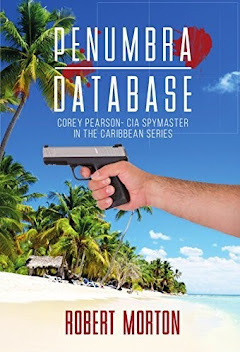
Even popular fiction has picked up on this
reality. The Corey
Pearson- CIA Spymaster Series leans into exactly that world,
showing how Corey Pearson and his elite CIA team keep tabs on individuals in
the U.S. with ties to hostile foreign powers, including Russia, China, Iran,
and North Korea.
In the series, they even expose a Russian
sleeper cell inside the United States that had penetrated the CIA and the
office of a U.S. senator who chairs the Senate Select Intelligence Committee.
It is fiction, but it reflects a real concern: hostile states look for openings
wherever they can find them.
In the end, this hits close to home for
ordinary Americans. Whether it is in a fictional spy series or in real life,
the point is the same: people in this country need to be protected from danger
that can come not only from threats overseas, but also from a small number of
people already living here legally who may be working for hostile interests.
That is why vigilance has to be real,
smart, lawful, and grounded in evidence, because keeping Americans safe is not
some abstract idea, but about protecting their families, communities, and daily
lives from harm.
Robert Morton is a member of the Association of Former Intelligence Officers (AFIO) and writes about the U.S. Intelligence Community (IC). He also writes the Corey Pearson- CIA Spymaster Series, which blends his knowledge of real-life intelligence operations with gripping fictional storytelling. His work offers readers an insider’s glimpse into the world of espionage, inspired by the complexities and high-stakes realities of the intelligence community.


No comments:
Post a Comment