
 |
| U.S. Intelligence Keeps Watch As Russian Spies Expand Across Latin America |
When most Americans think of Russian
spies, they picture secret meetings in Washington, Moscow, or Europe. But
Moscow is also looking for opportunities much closer to the United States,
across Latin America.
Why should Americans care? Because Russian
intelligence officers use contacts in Latin American countries to learn
about U.S. government activities, recruit people who know American secrets, and
spread false stories designed to influence public opinion. Those efforts could
put U.S. businesses, universities, government agencies, and national security
at risk.
Mexico is important because it shares a
long border with the United States. Officers from Russia’s GRU military
intelligence service and SVR foreign intelligence agency use embassy
jobs and business identities to make connections and gather information. They
might strike up a conversation at a reception or approach someone through a
business deal. What looks like ordinary
networking could be the first step toward recruiting an informant.
There’s another concern. Security experts
warn that Russian spies use migration routes through Mexico to sneak into
the United States. That doesn't mean ordinary Russian migrants are spies. Most
are simply looking for safety or a better life. The worry is that trained
Russian intelligence officers could blend in with legitimate travelers and slip
past U.S. border security.
And Russia has already shown how far its
spies can get using fake identities. Take Sergei Cherkasov, a Russian GRU
operative who spent years pretending to be a Brazilian citizen named Viktor
Muller Ferreira. His carefully invented background helped him gain admission to
Johns Hopkins University's School of Advanced International Studies in
Washington, D.C. He later secured an
internship at the International Criminal Court in the Netherlands, but Dutch
intelligence exposed him before he could start.
In July 2026, a Brazilian judge ordered
Cherkasov deported, reportedly to Russia. The United States wanted him
extradited to face charges filed in 2023, and the State Department strongly
criticized Brazil's decision. However,
the deportation order didn't establish that he had actually returned to Russia.
His case shows how a Russian spy using a fake Latin American identity could
gain access to respected universities and international institutions,
potentially putting sensitive information at risk.
Now look at Nicaragua. Russia acknowledges
having military advisers and specialists there, and Nicaragua authorized 230
Russian military personnel to enter the country between July and December 2026.
Moscow claims they're there to provide military training, disaster relief, and
humanitarian assistance. But officials in neighboring Costa Rica and regional
security experts are concerned about Russia's growing military presence and
what Moscow might be getting in return.
These military and police relationships give
Russian spies valuable contacts, access to sensitive information, and
opportunities to expand their spying operations. Russia's growing influence in
Central America, so close to the United States, is something American
intelligence needs to watch carefully.
Yes, Americans should care. Russian spies
who steal secrets from U.S. defense contractors could expose advanced military
technology. Those who infiltrate American research institutions could steal
valuable scientific discoveries. And Russian disinformation campaigns could
spread false information that divides Americans and weakens trust in their
government. Moscow doesn't need armed spies on American streets to threaten our
national security.
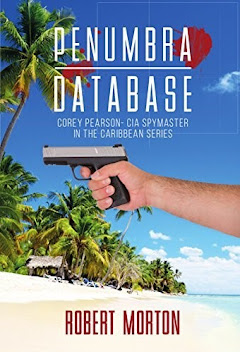
That growing Russian threat in Latin America
is also the theme of my spy thriller Crimson
Shadows, book four of my CIA Spymaster Short Story Series. In the
story, CIA operative Corey Pearson and his team uncover a plot involving
Russian intelligence officers, a powerful drug cartel, and a rogue Panamanian
general. Their mission is to stop Moscow from gaining a dangerous foothold in
Panama. To do that, they infiltrate a heavily guarded jungle plantation, gather
intelligence, and join a CIA special operations assault involving drones,
Apache helicopters, and a fierce firefight.
The story is fiction, but the danger of
Russia expanding its influence across Latin America is real. While Corey and
his team battle Russian-backed enemies in Panama, real Russian intelligence
officers are working to establish contacts and expand Moscow's reach throughout
the region. Those connections could eventually help Russia steal American
secrets, influence governments, and threaten U.S. national security. That's why
what happens in Latin America matters to every American.
Crimson
Shadows delivers its action in just 84 pages, but the underlying
question extends well beyond the story: What happens when Moscow turns
neighboring countries into platforms for operations aimed at America?
The answer should concern everyone.
Protecting national security doesn’t stop at the U.S. border. It starts with
recognizing how threats can develop long before they arrive.
Robert Morton is a member of the Association of Former Intelligence Officers (AFIO) and writes about the U.S. Intelligence Community (IC). He also writes the Corey Pearson- CIA Spymaster Series, which blends his knowledge of real-life intelligence operations with gripping fictional storytelling. His work offers readers an insider’s glimpse into the world of espionage, inspired by the complexities and high-stakes realities of the intelligence community.


No comments:
Post a Comment