
 |
| Putin’s Spy State: How Former KGB Officers Still Run Russian Intelligence |
A
lot of Americans thought the KGB disappeared when the Soviet Union fell apart.
One day the hammer and sickle came down, the Cold War ended, and that was
supposed to be the end of Moscow’s most feared spy agency. The name vanished,
the flags changed, and the uniforms got updated. But the KGB itself never
really went away. It just rebranded. Same people, same habits, same way of
thinking.
Today’s Russian intelligence services —
the FSB, GRU, and SVR — are basically the KGB under new labels. They inherited
the old files, the old spy tricks, and, most of all, the old culture. That
culture is built on secrecy, lies, and playing the long game. It’s driven by
the belief that the West, especially the United States, is always plotting
against Russia. For a lot of former KGB officers, “retirement” didn’t mean
walking away. It meant shifting roles. Many of them are still advising,
influencing, and quietly helping run Russian intelligence operations today.
No
one represents this carryover from the old KGB world better than Vladimir
Putin. Long before he became Russia’s strongman, Putin was a KGB officer
working in East Germany. He watched the Soviet empire collapse from the inside,
and he didn’t see it as a system that failed. He saw it as a national
humiliation brought on by weakness and betrayal. That moment stuck with him,
and it still shapes how he sees the world.
For Putin, intelligence agencies aren’t
just about protecting the country. They’re tools for holding power, keeping
rivals in line, and pushing Russia’s interests abroad. You can see the old KGB
playbook at work in today’s Russia: operations that can be denied, the use of
proxies, nonstop disinformation, targeted killings, and long-term efforts to
influence other countries. None of this is new or accidental. It’s classic Cold
War tradecraft, updated for the internet age.
Consider
Sergei Ivanov, another former KGB officer who rose to become defense minister
and later a senior Kremlin official. Or Nikolai Patrushev, who served as FSB
director and remains one of Putin’s closest advisors. Patrushev has openly
echoed KGB-era conspiracy thinking, blaming Western intelligence services for
everything from domestic unrest to global economic instability. These men do
not merely remember the KGB. They think like it.
Then there’s the GRU, Russia’s military
intelligence service, which has been tied to everything from cyberattacks to
outright assassinations. Take the 2018 poisoning of former Russian spy Sergei
Skripal in the UK. It had all the classic KGB fingerprints on it. It was
public, unmistakable, and meant to scare anyone else thinking about defecting.
The message was simple and brutal: you can run, you can hide, but you’re never
really out. In their world, betrayal is never forgiven, no matter how many
years go by.
This persistence of KGB thinking is a
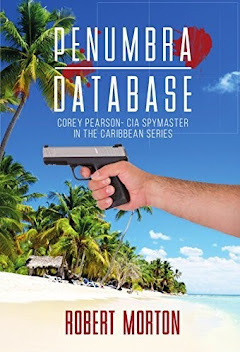
central theme in my spy thriller Mission of Vengeance.
In the novel, CIA spymaster Corey Pearson tracks a pair of former KGB agents
whose Cold War service alongside Putin never truly ended. Though officially
retired, they continue operating in the shadows, leveraging old networks and
old grudges to carry out modern attacks. The fiction reflects a reality
intelligence professionals understand well: spies rarely stop being spies.
What Mission of Vengeance plays
up in fiction is something history backs up. Former Russian intelligence
officers are still woven into the Kremlin’s inner circle, shaping decisions at
the highest levels. You can see their fingerprints on Russia’s war in Ukraine,
on cyber meddling in Western elections, and on efforts to push influence in
places like the Caribbean, Africa, and Latin America. It’s the same old Soviet
strategy: test American influence around the edges while leaving just enough
distance to deny direct involvement.
The murder at the center of my spy thriller
may be made up, but the idea behind it isn’t. The KGB didn’t disappear in 1991.
It broke apart, rebranded, and adjusted to the times. Today, its former
officers fill Russia’s political leadership, intelligence agencies, and major
corporations. They carry with them a Cold War mindset shaped by confrontation
and a deep, lasting distrust of the West.
If you want to understand modern Russia,
you have to understand this continuity. When Putin makes a move, he’s not
acting just as a president. He’s acting like a former intelligence officer who
was trained to expect enemies everywhere and to see compromise as surrender.
The agency names may say FSB or GRU now, but the instincts driving them are
pure KGB.
In the world of spies and intelligence,
the Cold War never really ended. It just went underground.
Robert Morton is a member of the Association of Former Intelligence Officers (AFIO) and writes about the U.S. Intelligence Community (IC). He also writes the Corey Pearson- CIA Spymaster Series, which blends his knowledge of real-life intelligence operations with gripping fictional storytelling. His work offers readers an insider’s glimpse into the world of espionage, inspired by the complexities and high-stakes realities of the intelligence community.


No comments:
Post a Comment