
 |
| CIA Ghosts Haunt Dominican Republic Power Games |
Caribbean history isn’t all beaches and
piña coladas. Sometimes it’s violence just out of sight and secrets nobody
wants dug up.
Look at the Dominican Republic.
For thirty years, Rafael Trujillo ran the
country like it was his personal property. He smiled for the cameras, but
behind the scenes he ruled with fear. His secret police, the SIM, kept people
in line with torture, threats, and midnight knock-on-the-door disappearances.
And Washington put up with him for a long time because he was fiercely
anti-communist. Back then, during the early Cold War, that alone was enough to
earn a free pass.
By
the late 1950s, though, Trujillo had become more trouble than he was worth. Too
violent. Too reckless. Too hard to defend. The CIA, which had once ignored the
mess, started paying attention. When Dominican insiders began plotting to kill
him, the Agency didn’t shut it down. Declassified files show the CIA supplied
weapons to the plotters in 1961. It wasn’t some big-budget spy movie operation.
Just enough help to tip the scales. Trujillo was ambushed and shot on a lonely
highway, and just like that, the balance of power in the Caribbean shifted.
The
SIM was officially dissolved in 1962. On paper, it was gone. In reality, its
agents scattered fast when the heat came down. Some vanished. Some changed
identities. Some kept their heads low and waited.
The chaos that followed opened the door to
something even bigger. In 1965, the country exploded into civil war after
reform-minded president Juan Bosch had been pushed out. Washington saw it and
thought one thing: not another Cuba. President Lyndon B. Johnson sent more than
20,000 U.S. troops into the Dominican Republic. And while the soldiers were
visible, the CIA was working hard in the background. At one point, it had its
second-largest station in the world there, behind only Saigon. That tells you how
seriously the U.S. took the idea of communism gaining ground just ninety miles
from Puerto Rico.
The CIA’s mission was simple on the
surface. Prevent a communist takeover. In practice, it meant intelligence
gathering, political influence, cultivating assets, and shaping outcomes. The
Dominican Republic became a chessboard, and the pieces were very real people.
Fast forward to today, and history doesn’t
feel so distant.
That shadow world is the backbone of my
spy thriller Mission Of Vengeance, set against the modern Dominican
Republic. In the novel, the current DR president isn’t just haunted by
Trujillo’s legacy. He’s weaponizing it. He’s been using remnants of Trujillo’s
assassins to threaten political opponents, breathing life into something that
was supposed to be buried decades ago.
The SIM may have been disbanded, but in
fiction, as in life, networks don’t just evaporate. They evolve.
In Mission Of Vengeance,
Corey Pearson uncovers that the old SIM torturers were replaced by a new
generation. One of the descendants, Jose Garcia, slipped away years ago with a
fortune and landed in Nassau, Bahamas. He set up a phony trust fund for his
kids, a clever front for darker ambitions. That money helped launch a rogue
assassin squad alongside his brother Carlos and other SIM loyalists. The
originals are gone now, but Carlos’ two sons picked up the torch. The family
business lives on. SIM’s still kicking.
And here’s where modern intelligence
tradecraft collides with Cold War ghosts.
In the novel, the U.S. President Rhinehart
and General Morrison confront the Dominican president with hard evidence. The
NSA has been listening. They’ve intercepted communications ordering SIM
descendants to rough up political adversaries. The Americans hold the leverage
and aren’t shy about it. Let Corey Pearson operate on Dominican soil to take
down former KGB spies hiding on a Russian oligarch’s yacht, or watch the
incriminating intel go public.
Those Russian operatives aren’t small-time
players. They’ve murdered an American family and orchestrated a suicide bombing
at a summit of Caribbean officials, killing and wounding CIA operatives on
Pearson’s team. The stakes are personal. They’re geopolitical. And they echo
the same Cold War tensions that once turned the Dominican Republic into one of
the CIA’s busiest outposts on the planet.
What makes the Dominican Republic such
fertile ground for a thriller isn’t just the beaches or the politics. It’s the
layered history. A dictator backed, then undermined. An intelligence service
dissolved but never fully erased. A U.S. intervention that left deep
fingerprints. A CIA station once second only to Saigon.
In places like this, the past never really
stays buried. It waits. It adapts. And sometimes, it picks up a gun again.
Robert
Morton is a member of the Association of Former Intelligence
Officers (AFIO) and writes about the U.S. Intelligence Community (IC). He also
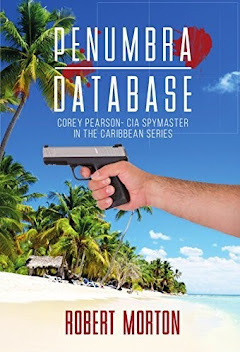
writes the full-length Corey
Pearson- CIA Spymaster Series, which blends his knowledge of real-life
intelligence operations with gripping fictional storytelling. His thrillers
reveal the shadowy world of covert missions and betrayal with striking realism.


No comments:
Post a Comment