
 |
| Insider Espionage Threats Unfolding on U.S. Soil |
When
most Americans think about foreign threats, we picture the big, dramatic stuff.
Missiles flying. Tanks rolling. Explosions lighting up the sky. Soldiers in
uniform. Something loud and obvious that leaves no doubt we’re under attack.
But now, that’s rarely how it actually
works.
The most effective attacks against the
United States don’t come with warning sirens. They slip in quietly. They’re
built to be denied. They move through middlemen, compromised insiders, and
carefully staged acts of violence that look random or accidental. At first,
nothing connects. Each piece feels isolated.
By the time people see the pattern, the
damage is done.
That’s the uncomfortable truth at the
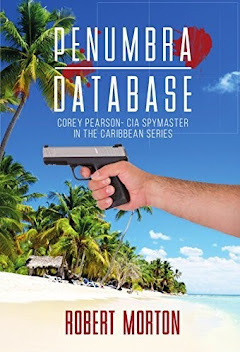
center of modern national security. It’s also the world explored in the Corey Pearson–CIA Spymaster Series.
The threats in those stories aren’t far-fetched. Versions have happened before.
They’re happening again now, just packaged differently.
Foreign adversaries learned long ago that
a direct military strike on the U.S. is a losing move. Instead, they aim for
confusion, fear, and overreaction. We’ve seen it before. The 1983 bombing of
the U.S. Marine barracks in Beirut killed 241 American service members—not in
declared war, but through a proxy attack meant to send a message. The USS Cole
bombing in 2000 followed the same logic. So did the 1998 U.S. embassy bombings
in East Africa. These attacks weren’t about territory. They were about pressure.
Intelligence agencies worry most about the
next evolution of that strategy—an attack on U.S. soil where attribution is
unclear, the weapon unexpected, and responsibility murky. An event like that
doesn’t just kill people. It fractures public trust and forces leaders to make
decisions in the dark. That’s the scenario at the heart of the Corey Pearson
novels when the war comes home: a looming attack, an unknown weapon, and an
enemy hoping America tears itself apart while searching for someone to blame.
That isn’t fiction. It’s doctrine.
Big attacks may shake a country. Insiders
do worse. They hollow it out.
Some of the deepest damage to U.S.
intelligence didn’t come from bombs or invasions. It came from trusted people.
Aldrich Ames, a CIA officer who spied for the Soviet Union and Russia, didn’t
need explosives. He passed along the names of U.S. sources. Many were executed.
Robert Hanssen, an FBI agent, did the same
for years. He didn’t need a weapon. He had access. That was enough.
Between them, American assets were
compromised, lives were lost, and trust inside the intelligence community was
deeply scarred.
The fallout from an insider goes beyond
leaked secrets. A mole poisons trust. Agencies turn inward. Officers
second-guess colleagues, mentors, and even leadership pipelines.
That’s why modern intelligence warfare
focuses so heavily on infiltration. It’s slow. Patient. Effective. The Corey Pearson–CIA Spymaster Series
captures that reality when the hunt turns inward—when young CIA officers are
targeted and Pearson realizes the enemy isn’t just outside the building. It’s
buried inside the system, shielded by time, bureaucracy, and misplaced trust.
That’s not an over-the-top twist. It’s a
worst-case scenario counterintelligence professionals openly discuss.
What makes these stories feel real is how
closely they mirror actual intelligence conflicts. Foreign services don’t move
fast. They move smart. They use defectors to feed selective truths. They
destabilize regions like the Caribbean or Eastern Europe not to conquer them,
but to deny the U.S. stability and influence. They operate in gray zones where
responses are slow, debated, and divided.
The assassinations, covert surveillance,
and betrayals in the Corey Pearson series reflect historical patterns. The Cold
War never truly ended. It traded uniforms for algorithms, bombs for influence,
and battlefields for institutions.
That’s the core message running through
the series. Survival depends on staying two steps ahead of adversaries who
never intend to be seen. The most dangerous wars aren’t the ones we declare.
They’re the ones already underway while we’re still looking for signs they’ve
begun.
The most unsettling part is this: these
operations work best when the public isn’t paying attention.
America’s greatest vulnerabilities aren’t
loud. They’re quiet, patient, strategic. They don’t show up on radar screens.
They show up years later in damaged institutions, lost lives, and a public left
wondering how things went so wrong without warning.
Countering those threats takes more than
technology or force. It requires vigilance, strong counterintelligence, and
leaders willing to confront uncomfortable truths about how enemies operate—and
how deeply they may already be embedded.
Robert Morton is a member of the Association of Former Intelligence Officers (AFIO) and writes about the U.S. Intelligence Community (IC). He also writes the full-length Corey Pearson- CIA Spymaster Series, which blends his knowledge of real-life intelligence operations with gripping fictional storytelling. His thrillers reveal the shadowy world of covert missions and betrayal with striking realism.


No comments:
Post a Comment