
 |
| When American Spies Get Caught Abroad |
Human sources are the backbone of U.S.
national security in places where you can’t just scroll online to see what’s
really going on. Missiles and propaganda don’t tell you everything. People do.
But when those networks get exposed, that backbone can snap. Suddenly
Washington is left in the dark, and adversaries know exactly how we were
watching them.
In recent years, U.S. intelligence took a
major hit in the Middle East when several secret informants in Iran and Lebanon
were uncovered. These weren’t random tipsters. They were paid CIA assets
recruited to keep tabs on Iran’s nuclear program and to track Hezbollah, the
powerful Iran-backed militia the U.S. considers a terrorist organization.
Losing them wasn’t just embarrassing. It meant losing direct insight into two
of the biggest threats in the region.
Details remain scarce because the CIA
rarely speaks publicly about operations. But current and former officials
describe a troubling picture: over several months, adversary
counterintelligence forces dismantled two separate espionage networks the CIA
had spent years building. Even worse, officials fear some of the people who
took those risks for the U.S. may have been killed by Iranian or Hezbollah
security forces.
Here’s the harsh reality: when a recruited
source is exposed in places like Tehran or Beirut, they don’t get a slap on the
wrist. They face interrogation, prison, and in many cases, execution. That’s
how Iran and its allies have historically treated suspected spies.
Put simply, the U.S. didn’t just lose
sources. It lost eyes and ears on some of the most serious threats in the
region. Iran’s nuclear program relies on secrecy and deception. Hezbollah, as
both a military force and an Iranian proxy, works hard to hide its capabilities
and plans. Without trusted human sources, it’s much harder for the U.S. to
anticipate dangerous shifts.
What really worries national security
officials isn’t just that these sources were blown. It’s how it happened.
Experts say basic tradecraft may have slipped — predictable meetings, repeated
contacts, patterns adversaries could track. In the spy world, mistakes can cost
lives and leave the U.S. with dangerous blind spots.
Seasoned analysts privately acknowledged
this wasn’t a small setback. It left the U.S. “flying blind” against Iran and
Hezbollah at a time when both are more assertive than they’ve been in years.
Iran backs militant groups across the region and challenges U.S. allies through
proxy forces. Hezbollah has a long history of deadly attacks on Americans.
There’s also a broader ripple effect. When
Iran and its allies show they can shut down U.S. spy operations, it sends a
message that America isn’t untouchable.
Future sources are watching. An engineer
inside a nuclear facility or a scientist with sensitive knowledge will think
carefully about the risk of helping the U.S. If they decide it’s too dangerous,
that’s a win for America’s adversaries.
Why should Americans care about spies half
a world away? Because intelligence guides decisions about troop deployments,
negotiations, and economic stability. If Iran edges closer to a nuclear weapon
or Hezbollah sparks a wider war, the fallout affects oil prices, regional
stability, U.S. allies, and possibly American troops.
When America’s human sources are exposed,
it doesn’t just end careers in the shadows. It creates real national security
risks that can reach far beyond the intelligence community.
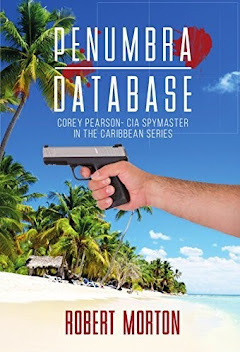
Robert
Morton is a member of the Association of Former Intelligence
Officers (AFIO) and writes about the U.S. Intelligence Community (IC). He also
writes the full-length Corey
Pearson- CIA Spymaster Series, which blends his knowledge of real-life
intelligence operations with gripping fictional storytelling. His thrillers
reveal the shadowy world of covert missions and betrayal with striking realism.


No comments:
Post a Comment