
 |
| Corey Pearson and his CIA team look like ordinary people in a New York crowd. They're not. And the threat they're hunting cannot be seen until it's already too close. |
Most Americans picture intelligence
agencies chasing terrorists, tracking hackers, or keeping tabs on foreign spies
in shadowy embassies.
But one of the biggest threats on their
radar now is much harder to see.
Viruses.
Disease outbreaks.
Lab accidents.
And then there’s the nightmare scenario:
someone using biology as a weapon, the same way enemies use bombs or
cyberattacks.
It sounds like a movie plot… until you
remember COVID.
Almost overnight, schools closed. Flights
were grounded. Store shelves went bare. Families were cut off from each other.
Businesses struggled or disappeared.
Millions of Americans learned the hard way
just how fragile normal life can be when a biological threat moves faster than
governments can respond.
That’s why intelligence agencies got
pulled so deeply into COVID.
They weren’t just asking where it came
from. They were asking how it spread, what other countries knew, whether anyone
was hiding information, and what it all meant for America’s security.
Because today, biological threats don’t
stay “over there.” A virus that appears in another country can wind up inside
an American airport within hours.
That’s where intelligence monitoring
enters the picture.
When outbreaks occur overseas, U.S.
intelligence agencies aren’t simply watching out of curiosity. They’re asking
hard questions. Is this natural? Was there a lab accident? Is a foreign
government covering up information? Could hostile nations exploit the chaos?
Could travel spread it rapidly into the United States?
Those aren’t just public health questions
anymore. They’re national security questions.
Recent concern surrounding Hantavirus
outbreaks is another reminder of how quickly Americans become aware that
invisible threats can move fast and create real fear. Most people had barely
heard of Hantavirus until headlines suddenly appeared and questions started
spreading online. That’s usually how it works. One moment life feels normal.
The next, people are wondering how serious something might become and whether
authorities are ahead of it.
Most of the monitoring and analysis
happening behind the scenes never becomes public. Intelligence agencies
coordinate with health experts, global monitoring systems, travel data
analysts, and allied nations trying to identify patterns before threats spiral
out of control.
And honestly, that hidden layer of
protection is something most Americans rarely think about.
People see firefighters fighting flames.
They see police cars on the street. But
intelligence work surrounding biological threats happens quietly in the
background. Analysts studying outbreaks. Monitoring foreign reporting. Watching
suspicious lab activity. Tracking travel patterns. Looking for signs that
something dangerous could spread before the public even knows it exists.
That hidden world became one of the
inspirations behind my spy thriller Shadow War.
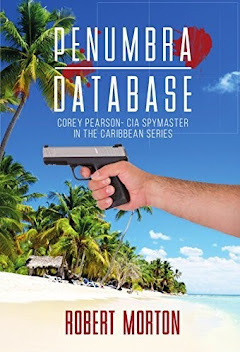
In the novel, CIA spymaster Corey Pearson
and his elite CIA team uncover a nightmare scenario involving a Russian sleeper
cell and a lethal engineered virus intended for release in New York City. What
makes the threat frightening isn’t just the virus itself. It’s the speed,
secrecy, and confusion surrounding it. By the time people realize something is
happening, it may already be too late.
That fear hits differently after living
through COVID. Suddenly, fictional biological threats don’t feel quite so
fictional anymore. And that’s exactly why intelligence agencies take
biosecurity so seriously today.
The battlefield isn’t what it used to be. Enemies
don’t need tanks rolling across a border to throw a country into chaos anymore.
One biological event can flood hospitals, shake the economy, empty shelves,
spread panic, and spark political turmoil all at once.
And sometimes, the fear comes from not
knowing. Was it natural? Was it an accident? Was it intentional? In the
intelligence world, those questions matter a lot.
What makes this even more unsettling is
the technology behind it.
AI, genetic research, and global travel
have changed the game. We’ve already seen how real biological threats can hit
close to home, from the 2001 anthrax attacks to COVID shutting down daily life,
and even lab safety scares here in the U.S.
The same breakthroughs that help
scientists fight disease can also raise terrifying questions.
What happens if that knowledge is stolen?
What happens if it’s misused?
What happens if an engineered pathogen
ends up in the wrong hands?
That’s one reason Shadow War
resonates with readers who enjoy realistic espionage stories. The novel taps
into a very modern kind of fear—the idea that America’s enemies may someday
attack not with bullets or missiles, but with something invisible moving
silently through crowded cities before anyone fully understands what’s
happening.
And while the novel is fiction, the threat
behind it feels a lot closer to real life than most people want to admit.
Most Americans don’t wake up thinking
about intelligence agencies tracking outbreaks overseas. They’re thinking about
work, school, bills, flights, groceries, and getting through the day.
But that’s exactly why the quiet work
matters.
Because a biological threat doesn’t need
to announce itself. It can move through airports, offices, schools, subway
cars, and crowded city streets before most people even know there’s a problem.
When intelligence works, warnings come
faster. Information moves sooner. Leaders have a better chance to act before
confusion turns into panic.
That’s the strange reality of modern
intelligence work.
Sometimes protecting Americans means
watching for something no one can see until it’s already too close.
Robert
Morton is a member of the Association of Former Intelligence
Officers (AFIO) and writes about the U.S. Intelligence Community (IC). He also
writes the Corey
Pearson- CIA Spymaster Series, which blends his knowledge of
real-life intelligence operations with gripping fictional storytelling. His
work offers readers an insider’s glimpse into the world of espionage, inspired
by the complexities and high-stakes realities of the intelligence community.


No comments:
Post a Comment