
 |
| Behind the Yachts Lies a Darker Story |
When
Americans hear the term "Russian oligarch," they usually picture
enormous yachts, luxury villas, private jets, and men worth billions of dollars
living lives most people can barely imagine.
That's exactly what makes them so useful
to the Kremlin.
U.S. intelligence doesn’t see Russian
oligarchs as just rich businessmen. Many live where money, politics, influence,
and national security collide. Some are tied tightly to senior Russian
officials. Others move fortunes through tangled corporate and financial webs.
And a few sit so close to Putin’s inner circle that tracking them can reveal
what the Kremlin may be planning next.
Take Russian billionaire Viktor
Vekselberg. After Russia invaded Ukraine, U.S. authorities seized his $90
million superyacht, Tango. To most people, it looked like another rich
man’s floating palace. To the CIA, it was a doorway. The Agency wanted to know
who funded it, who boarded it, who held meetings there, and how those money
trails led back to powerful figures in Moscow.
For the CIA, following the money trail
often exposes relationships meant to stay buried. That’s one big reason Russian
oligarchs draw so much attention.
Many Americans picture modern spying as
hackers in dark rooms stealing secrets. Cyber espionage matters, no question.
But intelligence still runs on human connections. A well-connected oligarch can
slip into circles filled with business leaders, politicians, academics, defense
contractors, and global power players in ways a traditional intelligence
officer never could. A spy may have
trouble getting through the door. A billionaire often gets invited, and that
gets far darker when his ties run straight back to the Kremlin.
Oleg Deripaska is a perfect example. He
was the Russian oligarch tied to the case involving former FBI
counterintelligence official Charles McGonigal. McGonigal later admitted he
conspired to violate sanctions while working for Deripaska. That case rattled
the intelligence world because it showed how dangerous these billionaire
networks can become when money, access, and influence start moving in the
shadows.
The CIA understands that when money,
influence, and access combine, opportunities emerge that foreign intelligence
services may seek to exploit. That concern inspired one of the central villains
in my spy thriller Shadow
War.
In the novel, Russian oligarch Mikhail
Smirnov appears to be nothing more than a successful international businessman.
Behind the scenes, however, he operates a secret biochemical research program
deep inside Russia while using his wealth and international connections to
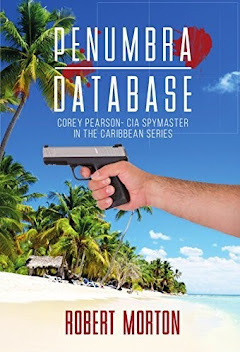
conceal activities that threaten American lives. Corey Pearson's investigation
eventually reveals that Smirnov's business empire serves as a convenient cover
for much darker objectives.
Smirnov may be fictional, but the danger
behind him isn’t. Russian oligarchs move across borders, park money offshore,
and run businesses that stretch through multiple countries. The CIA watches
those trails closely because money has a way of leaving footprints, and
sometimes those footprints lead straight to something much darker.
That’s exactly what investigators found
while digging into Russian sanctions evasion after Ukraine was invaded. Western
intelligence says Russian spies kept hunting for restricted technology,
equipment, and expertise despite the sanctions. They often used tangled
business deals, shell companies, middlemen, and financial tricks to get around
the rules.
In
many cases, tracing those networks became just as important as tracking
old-school spy operations. Put another way, one suspicious wire transfer can
tell investigators as much as a stolen classified file.
That reality plays a major role in Shadow War as
well. Corey Pearson doesn't initially discover Smirnov through a dramatic
gunfight or a high-tech hacking operation. Instead, he begins uncovering the
threat by tracing connections, relationships, financial activity, and business
dealings that seem unrelated until the larger picture emerges. The
investigation stretches from the Caribbean to Cuba and eventually exposes a
threat capable of reaching America's shores.
That’s how real intelligence work often
unfolds. Threats don’t always show up waving a flag. Sometimes they hide behind
respectable companies, luxury investments, offshore accounts, and polished
business deals.
That’s why U.S. intelligence watches
oligarch networks so closely. It’s not about targeting someone just because
they’re rich. It’s about finding the hidden connections that help hostile
governments dodge sanctions, grab technology, move money, buy influence, or
support operations that could threaten Americans.
Most Americans will never see this work
happening. They won’t see analysts digging through financial records, tracing
shell companies, or mapping quiet relationships across continents.
But intelligence professionals know the
next major threat may not come from a missile silo or military base. It may
start in a boardroom. A private deal. An offshore account in a shell company Or
with a billionaire who has the right speed-dial phone number in Moscow.
That’s why Russian oligarchs stay on U.S.
intelligence radar. Because when investigators follow the money, they often
find something far more dangerous than wealth.
They find where power really lives.
Robert Morton is a member of the Association of Former Intelligence Officers (AFIO) and writes about the U.S. Intelligence Community (IC). He also writes the Corey Pearson- CIA Spymaster Series, which blends his knowledge of real-life intelligence operations with gripping fictional storytelling. His work offers readers an insider’s glimpse into the world of espionage, inspired by the complexities and high-stakes realities of the intelligence community.


No comments:
Post a Comment