
 |
| CIA operatives spend years mastering cover stories that help them blend seamlessly into hostile territory and survive intense scrutiny |
One of
the first things people think about when they hear the words "CIA
operative" is a fake identity. Movies make it look simple. A spy puts on a
pair of sunglasses, flashes a fake passport, and suddenly becomes someone else.
In reality, creating and maintaining a believable cover can take years of
preparation and is one of the most important skills in the CIA's tradecraft
toolbox.
The purpose of a cover is simple: protect
the operative's true identity while giving them a believable reason to be where
they are, doing what they are doing. A cover can involve false passports,
driver's licenses, credit cards, employment records, social media accounts, and
a carefully constructed personal history. The goal is not to stand out. The
goal is to blend in so completely that nobody thinks twice about you.
That challenge has become even harder in
today's world. Facial-recognition technology, online databases, social media,
and digital records make it increasingly difficult to create a convincing false
identity. Intelligence services now have to think not only about what someone
looks like, but also about the digital footprint they leave behind. In many
ways, maintaining cover in the twenty-first century is more difficult than
ever.
One of the most famous examples of a CIA
officer operating under cover is former CIA officer Valerie Plame. For years,
Plame worked undercover in Europe and the Middle East gathering intelligence
related to weapons of mass destruction. Her cover identity was tied to a
fictitious consulting company called Brewster Jennings & Associates.
The cover provided a believable
explanation for her international travel and allowed her to establish
relationships with people who might have access to sensitive information. When
her identity was publicly exposed in 2003, it sparked a major political controversy
and criminal investigation. I was so angered by her outing at the time that I
wrote the article Karl
Rove and Dick Cheney Made All Americans Fair Game.
Another remarkable example was CIA officer
Tony Mendez, whose ingenuity helped save six American diplomats during the Iran
hostage crisis. Mendez devised one of the most creative cover stories in
intelligence history. Posing as a Hollywood producer scouting locations for a
science-fiction film called "Argo," he entered Iran and orchestrated
the escape of the diplomats.
Operating under the fictional identity of
Kevin Costa Harkins, Mendez used imagination, preparation, and nerves of steel
to carry out a mission that many believed was impossible. His operation later
became the basis for the Academy Award-winning film Argo.
I had the privilege of meeting Tony years
ago at an AFIO luncheon. Afterward, I wrote a story about him. A month later,
his son called to tell me that Tony had lost his battle with Parkinson's
disease. Rest in peace, Tony, and thank you for your service to our country.
The importance of cover is something I
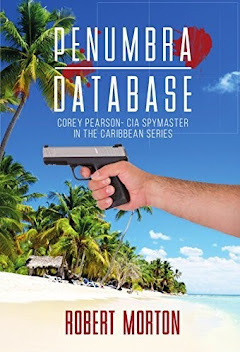
explored in my spy thriller Mission
Of Vengeance. In the novel, CIA spymaster Corey Pearson assumes deep
cover as a marine biologist. The cover allows him to move through the Bahamas
without attracting attention and gives him access to information that would
otherwise remain out of reach.
A good cover is more than a fake name. It
is a life. It is a history. It is knowledge that can withstand scrutiny.
Corey understood that. In one scene, he
sat with his son Matt reviewing photographs of Atlantic spotted dolphin pods
living in the Sea of Abaco. Matt could identify individual dolphins and knew
their life histories from reading Corey's handwritten field notes collected
over a decade earlier. Long before the operation began, Corey had documented
Nassau Grouper populations throughout the Bahamian archipelago and studied the
behavior of dolphins around Abaco.
That depth of knowledge made the cover
believable. If someone questioned him, he could talk for hours about marine
biology because he had lived it. Hollywood occasionally gets this aspect of
espionage right. The film Argo remains one of the best examples because it
captures an important truth about intelligence work. Successful operations
often depend less on gadgets and gunfights than on creativity, preparation, and
convincing people that you belong exactly where you are.
At its core, espionage is about trust and
deception. A well-crafted cover helps intelligence officers gain access, build
relationships, and collect information while staying safe. Without that
protection, many operations would never get off the ground.
Whether in real life or fiction, the
lesson remains the same. Valerie Plame's cover allowed her to gather
intelligence around the world. Tony Mendez's cover helped save American lives
during a hostage crisis. And in Mission Of Vengeance, Corey
Pearson's cover as a marine biologist becomes the key that opens doors,
uncovers secrets, and ultimately determines the success of his mission.
The best cover stories are the ones nobody
notices. And in the intelligence business, that's exactly the point.
Robert Morton is a member of the Association of Former Intelligence Officers (AFIO) and writes about the U.S. Intelligence Community (IC). He also writes the Corey Pearson- CIA Spymaster Series, which blends his knowledge of real-life intelligence operations with gripping fictional storytelling. His work offers readers an insider’s glimpse into the world of espionage, inspired by the complexities and high-stakes realities of the intelligence community.


No comments:
Post a Comment