
 |
| What Happens When America’s Satellites Go Dark? |
Maybe we should.
Every time you follow GPS directions,
check the weather, board an airplane or depend on a shipment arriving where
it's supposed to go, satellites are somewhere in the chain making it happen.
For the U.S. military and intelligence
community, the dependence runs much deeper. American satellites track
adversaries, guide weapons, communicate with forces worldwide, detect missile
launches and collect intelligence from places where putting a human spy would
be difficult or impossible.
Take enough of those satellites away and
America doesn't simply lose some sophisticated equipment in space. It goes blind.
And Russia and China understand that very
well.
When people hear "space
warfare," they probably picture missiles knocking satellites out of orbit.
That's possible. But the scarier reality is that an enemy may not have to
destroy a satellite at all. It might be enough to jam its signals, compromise
its software or attack the ground systems controlling it.
We've already seen what that kind of
warfare can look like. During Russia's war against Ukraine, pro-Kremlin hackers
hijacked a satellite television service and replaced regular programming with
footage of Russia's Victory Day parade. Nobody blew up a satellite or fired a
missile. They simply went after the information moving through it.
And future attacks could target something
far more important than television programming.
Think GPS.
Americans tend to think of GPS as the blue
dot on their phone telling them where to turn. But GPS timing and navigation
are woven into transportation, communications, financial networks and military
operations.
Now imagine those signals disappearing or,
even worse, being manipulated so users don't realize the information they're
receiving is wrong.
Suddenly,
a satellite problem thousands of miles above Earth becomes a homeland-security
problem right here at home.
That vulnerability is the idea I explore
in my short spy thriller Ghost
Signal. The story begins when the U.S. Navy's supposedly
untouchable Falcon X Recon drone is hijacked and deliberately crashed into the
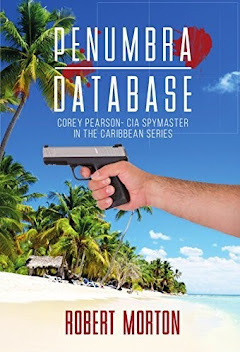
Caribbean. CIA spymaster Corey Pearson and his team eventually discover the
frightening truth: the drone wasn't the real target.
It was the test.
Behind the attack is a Russian operation
developing a way to seize control of America's surveillance satellites,
potentially blinding U.S. intelligence and crippling national defense without
launching a conventional attack.
Ghost Signal is
fiction. But attacking the systems America depends upon instead of confronting
the United States head-on is increasingly part of the real-world struggle for
space.
And Russia isn't alone. China has been
watching closely what satellites can do in a modern war, and its researchers
have studied ways to cripple huge constellations like Starlink. Some ideas
sound straight out of a techno-thriller: lasers, attack satellites,
interference with solar panels and strikes on the supply chains keeping those
systems alive.
That last part is where things get
interesting. A sophisticated U.S. satellite may be tough to hit directly, but
it still depends on software developers, ground stations, contractors,
suppliers and people. Foreign spies know that, so they hunt for the weak spot.
And sometimes that weak spot isn't
orbiting Earth. It's sitting behind a desk.
Now
imagine what that could mean in a world hooked on satellite navigation,
communications and military networks. Flights could be disrupted. Ships and
trucks could lose reliable navigation. Communications could go down, and
systems that depend on precise satellite timing could start failing one after
another. The battlefield may be above us, but the fallout could hit right here
at home.
And satellites themselves may become
weapons. China has tested spacecraft with robotic arms that can maneuver near
other objects in orbit. Russia has experimented with "nesting doll"
satellites that release smaller objects, including projectiles capable of
threatening nearby satellites.
That's a nightmare for U.S. intelligence.
American analysts have to figure out not just where an adversary's satellite is
headed, but what its operators plan to do once it gets there.
And America's intelligence edge depends
heavily on space. Reconnaissance satellites watch military bases, missile
sites, ships and aircraft, while missile-warning satellites can give precious
notice when a launch begins.
Picture a confrontation over Taiwan,
Eastern Europe or the Middle East and American satellites suddenly start
malfunctioning. Communications disappear. GPS becomes unreliable.
Reconnaissance coverage develops gaps.
Is it equipment failure? Cyberattack?
Sabotage? Or the opening move of something much bigger?
That's also the larger idea behind Ghost Signal. Corey
Pearson's team discovers that the Russian operation couldn't succeed through
technology alone. Someone inside the U.S. intelligence community was helping
open the door.
That reflects an old intelligence truth:
technology changes, but people remain vulnerable. An adversary doesn't always
have to defeat American encryption if it can compromise someone who already has
access.
Sometimes the easiest way through a locked
door is finding someone on the inside who has the key, and that's what makes
the growing competition in space so dangerous.
Satellites have become part of the
invisible infrastructure holding modern America together. Most of us don't
notice them because they work so well… until someday they don't.
An attack might not begin with explosions.
It could start quietly, thousands of miles overhead. A GPS screen suddenly
freezes. A military communications link goes dark. A reconnaissance satellite
stops talking.
And somewhere inside the Pentagon, someone
looks at the screens and asks the question nobody wants to hear:
Is this just a technical glitch, or has the war already begun?
Robert Morton is a member of the Association of Former Intelligence Officers (AFIO) and writes about the U.S. Intelligence Community (IC). He also writes the Corey Pearson- CIA Spymaster Series, which blends his knowledge of real-life intelligence operations with gripping fictional storytelling. His work offers readers an insider’s glimpse into the world of espionage, inspired by the complexities and high-stakes realities of the intelligence community.


No comments:
Post a Comment