
 |
| In Mission of Vengeance, Corey Pearson’s CIA team interrogates a KGB defector, unsure he’s genuine. |
Imagine this: a nervous man walks into an
American embassy somewhere in Eastern Europe. He asks to speak to U.S.
intelligence. He says he works for the enemy and has names, operations, maybe
even classified documents. Then comes the sentence every intelligence officer
dreams of hearing:
“I want to work for you.”
Sounds like a jackpot.
It could also be a trap.
In the spy world, these volunteers are
called walk-ins. Some are real defectors. Some are after money or revenge. And
some may have been sent by the very service they claim to be betraying. The CIA
has a term for that trick: a “dangle,” someone deliberately
offered up to a foreign intelligence service to be recruited and used as a
double agent.
That is why the first question is never
simply, What does he know?
It is also: Why is he here, and who
really sent him?
History offers a spectacular example of
what can happen when the answer is almost missed.
In 1992, KGB archivist Vasili Mitrokhin
traveled out of Moscow and approached the U.S. Embassy in Riga. He wanted to
talk to American intelligence.
He was turned away.
Mitrokhin didn't exactly look like
Hollywood's idea of a master spy. He was rumpled, awkward and solitary, more
dusty archivist than James Bond. Later, he approached the British. Inside a
shopping trolley, beneath sausages used as cover, were notebooks packed with
information he had secretly copied from some of the KGB's most sensitive files.
What looked like an unremarkable man
carrying groceries turned out to be an intelligence gold mine.
For years, Mitrokhin quietly copied names,
operations, payments and details of secret KGB activity, then stashed his
handwritten archive in containers beneath his country home. What he saved
eventually helped investigators trace roughly a thousand Soviet and Russian
intelligence connections across 36 countries. The British even pulled off a
remarkable escape, getting Mitrokhin and his family out of the former Soviet
Union.
The lesson is uncomfortable: sometimes the
unimpressive stranger standing at the embassy door really is carrying the keys
to the kingdom.
But sometimes Moscow sends the stranger.
CIA historical accounts describe a KGB
officer known to the Agency as GTPROLOGUE who appeared during the 1980s
as a potentially valuable intelligence source. There was one enormous problem.
He was a plant.
The KGB had dispatched him as a
dangle-type double agent. The CIA accepted him as a source, and he became a
channel through which Soviet intelligence could feed deception and
disinformation to the Americans.
That's counterintelligence at its
nastiest. The best deception isn't an outrageous lie. It's a lie wrapped around
enough truth to make you trust the package.
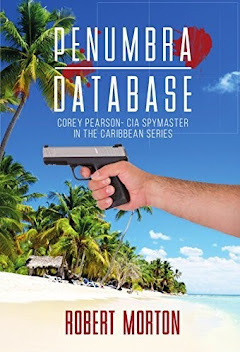
That same kind of real-world espionage
tension runs through Mission
of Vengeance, the first novel in the Corey Pearson- CIA Spymaster
Series. In the Dominican Republic, a former Russian KGB officer
defects to Corey Pearson, forcing Corey and his CIA team to determine whether
the man is truly turning on Moscow or walking them into a trap. The team
debriefs him inside the U.S. Embassy in Santo Domingo, where every answer
matters and every inconsistency could signal danger.
Motivation matters, too.
In the real world, Soviet General Dmitri
Polyakov secretly supplied valuable intelligence to the United States after
becoming bitter toward the Soviet system. One account links his decision partly
to Soviet authorities refusing permission for his seriously ill son to receive
lifesaving medical treatment in New York. Years later, Polyakov was betrayed
after CIA officer Aldrich Ames began spying for Moscow.
Money. Anger. Ideology. Ego. Revenge.
Fear. Ironically, the same reasons why people defect are used by the CIA to
recruit foreign spies: The
MICE Method- How the CIA Persuades People to Betray Their Country
Every would-be defector has a reason for
crossing the line, and counterintelligence officers have to decide whether that
reason is genuine. Because if it is,
the decision can come with a terrible price.
Former Russian security officer Alexander
Litvinenko turned against Moscow and was poisoned with radioactive polonium in
London in 2006. Former Russian military intelligence officer Sergei Skripal,
who spied for Britain, survived a 2018 Novichok nerve-agent attack in
Salisbury. A discarded perfume bottle tied to the operation later killed an
innocent British woman.
For anyone considering walking through a
Western embassy door, the warning is chilling: Betrayal can follow you for
years.
That’s why a walk-in can never be treated
as just another spy looking to switch sides. It’s counterintelligence,
psychology and verification under pressure. His background has to hold up. His
information must match what’s known elsewhere. His motives need to ring true.
And one wrong answer can change everything.
Because a planted defector may be after
far more than feeding the CIA bad information. He could be fishing for what the
Agency already knows, watching which questions its officers ask, learning what
targets matter to Washington, or quietly figuring out how American intelligence
really works.
And if the CIA gets it wrong, the man
sitting across the table may not be defecting at all. He may already be running
an operation against them.
One
convincing walk-in could become a peephole into the CIA itself. So when a
stranger walks into an embassy and whispers, “I have secrets,” the
smartest intelligence officer in the room doesn't celebrate.
He starts asking questions.
Because the most valuable spy you ever
recruit and the most dangerous spy sent to deceive you may walk through exactly
the same door.
Robert Morton is a member of the Association of Former Intelligence Officers (AFIO) and writes about the U.S. Intelligence Community (IC). He also writes the Corey Pearson- CIA Spymaster Series, which blends his knowledge of real-life intelligence operations with gripping fictional storytelling. His work offers readers an insider’s glimpse into the world of espionage, inspired by the complexities and high-stakes realities of the intelligence community.


No comments:
Post a Comment