
 |
| Russia doesn’t need missiles or warships to attack American interests in the Caribbean. From behind computer screens, Moscow can spread lies, manipulate social media, and turn public opinion against the United States. It’s a shadow war most Americans never see—and it’s happening right in our backyard. |
Imagine
scrolling through Facebook, X, or Instagram and coming across a disturbing
story claiming the United States is secretly plotting to dominate Caribbean
nations. It looks legitimate. Maybe a local journalist posted it. Perhaps a
popular social media influencer shared it. Thousands of people are discussing
it.
There's just one problem. The story may
have originated in Moscow.
Welcome to Russia’s new kind of warfare.
Forget missiles, submarines, and fighter jets. Moscow has found another way to
go after America, and you might be looking at it every time you open your
phone. Fake news stories, phony media outlets, AI-generated propaganda, and
social media accounts all working to make Russian lies look like the truth.
And Moscow isn't just targeting countries
halfway around the world. It's operating right in America's backyard—the
Caribbean.
In November 2023, the U.S. State
Department blew the whistle on a Russian-funded propaganda operation targeting
Latin America, including Cuba. Behind it were Russian organizations with names
like the Social Design Agency, Structura, and the Institute for Internet
Development. Their mission? Flood the region with anti-American and anti-NATO
messages, disguise them as legitimate local news, and convince ordinary people
they were getting the truth from journalists they could trust.
Here's
how Moscow pulled it off. Russian operatives cooked up propaganda, handed it to
Spanish-speaking editors, and worked to get it published by regional news
outlets. From there, local journalists and social media influencers spread those stories, while unsuspecting readers had no idea the messages
originated in Russia.
Sound like something out of a CIA spy
thriller?
That's precisely the kind of threat
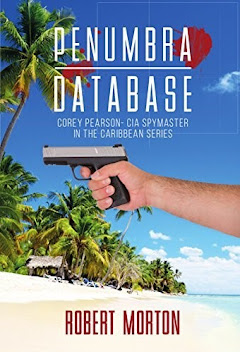
confronting CIA spymaster Corey Pearson in my novel, Mission of Vengeance.
After an American family is brutally murdered at a luxury resort in the
Dominican Republic, the President authorizes a covert operation to uncover
those responsible. Pearson's investigation exposes former KGB operatives
pursuing a dangerous Russian agenda in the Caribbean.
But Moscow isn't just slipping misleading stories into newspapers. Its information warfare has gotten sneakier. Take Doppelganger, a Russian influence operation. In September 2024, the Justice Department seized 32 internet domains tied to the campaign. Some websites masqueraded as American news organizations. Others posed as independent outlets, hoping readers wouldn't spot the trick.
The operation used fake American personas,
social media accounts, ads, and phony news reports to push Kremlin-backed messages,
undermine support for Ukraine, and promote Moscow's interests.
Think about it. Someone thousands of miles
away can sit behind a computer, pretend to be your American neighbor, stir up
trouble online, and get real people spreading Moscow's message for free.
Artificial intelligence makes that trick easier. In July 2024, U.S. authorities busted a Russian-linked social media bot operation using AI and hundreds of fake accounts. They looked like everyday people but pushed messages serving the Kremlin's interests.
In Mission of Vengeance,
Pearson discovers a fictional operation that closely parallels these tactics. A
former KGB operative establishes a sophisticated computer network at his
Dominican Republic estate, where Russian hackers manipulate conversations
across X, Facebook, Instagram, TikTok, and other platforms.
Their mission? Convince Caribbean
populations that Washington intends to dominate their governments, interfere in
their sovereignty, and control their economies.
An insider's defection gives Pearson a
disturbing look inside the operation, revealing how Russian intelligence can
exploit regional mistrust to turn public sentiment against the United States.
Here's what makes Moscow's propaganda so
dangerous: It doesn't always have to make things up. Russian operatives take
real political disagreements, old grudges, and distrust of American foreign
policy, then stir the pot until people can't tell what's a legitimate complaint
and what's propaganda cooked up in Moscow.
The objective isn't simply to make people
believe a lie. It's to create enough confusion and distrust that Americans and
their regional neighbors begin questioning whom they can believe.
Has Moscow's propaganda changed minds
across the Caribbean? That's hard to prove. But there's no mistaking what
Russia is trying to accomplish—or why Washington should worry.
That's also what makes Mission of Vengeance
more than a conventional espionage adventure. Pearson and his undercover CIA
team aren't merely hunting Russian operatives. They're confronting a shadow
campaign intended to undermine American influence while remaining hidden behind
seemingly legitimate voices.
And that's the unsettling reality of
modern intelligence warfare. America can track Russian warships approaching the
Caribbean. Satellites can identify suspicious aircraft and military
installations. Intelligence agencies can monitor hostile communications.
But spotting Russian propaganda hidden
among thousands of everyday social media accounts? That's a whole different ball
game.
Moscow doesn't need to send troops into
the Caribbean to threaten America. All it takes is a believable lie, a network
of computers, and enough unsuspecting people willing to spread the story.
And here's the scary part. By the time
Americans figure out who's really pulling the strings, Moscow may have already
accomplished its mission.
Robert Morton is a member of the Association of Former Intelligence Officers (AFIO) and writes about the U.S. Intelligence Community (IC). He also writes the Corey Pearson- CIA Spymaster Series, which blends his knowledge of real-life intelligence operations with gripping fictional storytelling. His work offers readers an insider’s glimpse into the world of espionage, inspired by the complexities and high-stakes realities of the intelligence community.


No comments:
Post a Comment