
 |
| Some of Moscow's most dangerous spies learned their trade decades ago. |
The
Soviet Union fell apart more than 30 years ago, and most Americans figured the
KGB went down with it. Think again. Some of those old Cold War spies never
quit. They just traded their Soviet uniforms for expensive suits, took on new
titles, and worked their way into some of the most powerful positions in
Russia's intelligence agencies. And here's the part that should worry every
American: They're still in the spy business, and America remains one of their
biggest targets.
When the Soviet Union fell apart in 1991,
its notorious KGB was broken up and reshuffled. But its spies, training,
networks, and dirty tricks didn't just disappear.
Two agencies took over. The Foreign
Intelligence Service (SVR) picked up the KGB's overseas spying. The Federal
Security Service (FSB) took charge of security and counterintelligence at home
while extending its reach overseas.
Plenty of veteran spies brought their Cold
War experience straight into these agencies. Some even climbed to the top.
Take Vladimir Putin. Long before he became
Russia's president, he worked for the KGB, including a posting in Dresden, East
Germany. He learned how to recruit informants, build connections, and spot
weaknesses in the West.
Then there's Alexander Bortnikov. He
joined the KGB back in 1975 and took over the FSB in 2008. American
counterintelligence officers know what that means: a seasoned spy with decades
of experience and plenty of inside knowledge.
And don't overlook Sergei Naryshkin, who
reportedly worked in Soviet intelligence under diplomatic cover. He's been
running the SVR since 2016, overseeing Russia's spying operations abroad.
These aren't characters dreamed up for
some Cold War spy thriller. They're real men holding powerful jobs inside
Russia's intelligence services.
And that connection between yesterday's
KGB and today's Russian spy agencies inspired my CIA thriller, Shadow War. Its
ruthless antagonist is a former KGB operative leading a Russian sleeper cell
inside America, determined to carry out a catastrophic attack before a
presidential election.
So how much trouble can Russia's old Cold
War spy networks still cause? Plenty, and we're not talking about the
cloak-and-dagger stuff from spy movies. In 2020, investigators uncovered the
SolarWinds cyberespionage operation. Russian intelligence hackers had tampered
with trusted software updates, opening doors into sensitive U.S. government
systems and private company networks.
In April 2021, the U.S. government
formally attributed the operation to Russia's SVR. The implications were
chilling. Foreign spies could steal sensitive information without ever
physically entering a government building.
And cyberespionage is just part of the
danger. Russian intelligence still uses old-school KGB tactics like recruiting
informants and secretly watching targets, alongside covert cyber operations.
The technology's changed, but the goal hasn't: steal secrets, find America's
weak spots, and gain an edge over Washington whenever possible.
That's the unsettling premise behind Shadow War. CIA
spymaster Corey Pearson discovers that a former KGB officer is orchestrating an
attack on American soil. But what weapon is involved? A suitcase nuclear bomb
or a deadly biological agent intended to unleash catastrophe on Wall Street? The
uncertainty becomes as dangerous as the threat itself!
America isn't sitting around while Russian
spies go to work. The CIA tracks Moscow's activities overseas, hunts down
hostile spy networks, and recruits informants who can reveal what the Kremlin
is planning.
Back home, the FBI investigates foreign
spies, while the NSA and cybersecurity agencies hunt for electronic snooping
and cyberattacks against American targets.
And
sometimes intelligence chiefs even communicate directly. In August 2026, CIA
Director John Ratcliffe reportedly met SVR Director Naryshkin in Moscow. The
precise subjects discussed weren't publicly disclosed, but the reported meeting
demonstrated an important reality: Intelligence adversaries sometimes maintain
direct channels to manage dangerous disputes.
But behind those diplomatic meetings, the
spy war never stops. And here's what makes it so tricky: U.S. intelligence has to
figure out who's a legitimate diplomat and who's secretly working for Moscow,
uncover hidden spy networks, and spot threats before they turn into national
security disasters.
But what if Moscow's most dangerous
operative isn't sitting in a foreign embassy or hunched over a computer? What
if that person is inside an American institution, betraying the country?
That's the nightmare Corey Pearson and his
CIA team face in Shadow
War. The Russian plot doesn't stop at America's borders. It reaches
deep into institutions, where political schemes, double-crosses, and loyalties
threaten to wreck their investigation.
It's a spy thriller, but the danger behind
it is real! An adversary doesn't need to invade America to damage its national
security. Stealing classified intelligence, penetrating government networks, or
recruiting someone with access to sensitive information can create enormous
consequences.
And sometimes the person causing the most
damage is someone nobody thinks to suspect.
The Soviet Union disappeared in 1991, but Its
intelligence traditions survived, and former KGB officers still occupy powerful
positions in Russia's security establishment.
The Cold War's old spies are getting older…
but the intelligence war they helped build is far from over.
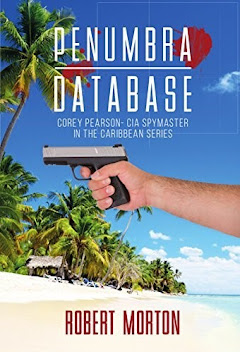
Robert Morton is a member of the Association of Former Intelligence Officers (AFIO) and writes about the U.S. Intelligence Community (IC). He also writes the Corey Pearson- CIA Spymaster Series, which blends his knowledge of real-life intelligence operations with gripping fictional storytelling. His work offers readers an insider’s glimpse into the world of espionage, inspired by the complexities and high-stakes realities of the intelligence community.


No comments:
Post a Comment