
 |
| America’s quiet northern border may hide serious security threats. |
It could begin with a boat crossing the
St. Lawrence River after midnight.
Or a car idling on a lonely road in
northern Maine.
Or a TikTok video quietly advertising an
illegal crossing from Canada into Vermont.
This isn’t the kind of border crisis
Americans are used to seeing on TV. No desert fences. No long lines of
migrants. No massive checkpoints. Up north, the border often looks almost
peaceful: forests, rivers, farmland, lakes and small communities where crossing
into another country can sometimes mean little more than walking through the
woods.
That geography creates an enormous
security challenge.
The problem isn’t Canada. Canada remains
one of America’s closest allies and an important intelligence and
law-enforcement partner.
The real problem is that transnational
criminal networks can exploit a border stretching nearly 5,500 miles, much of
it lightly populated and difficult to monitor around the clock.
And those networks are getting smarter.
Federal investigators in Vermont recently
described how human smugglers used TikTok to advertise successful border
crossings. Migrants appeared in videos praising the people who helped them
enter the United States, almost like customers leaving positive reviews for a
business.
Interested clients could then connect with
smugglers through messaging apps.
Think about what that means.
Smuggling no longer depends on someone lurking
in a back alley and whispering directions. Now, the whole operation can start
on a smartphone thousands of miles away. Drivers get hired online. Routes are
shared with a tap. Payments move electronically.
So by the time someone actually reaches
the border, most of the plan may already be locked in.
That creates a very different challenge
for U.S. law enforcement and intelligence agencies.
The St. Lawrence River presents another
vulnerability.
Authorities uncovered a cocaine
trafficking operation that moved drugs originating in Florida and California
north through New York before smugglers transported them by boat across the
river into Canada. Homeland Security investigators intercepted one shipment
containing more than 23 pounds of cocaine.
Pull up a map, and the problem jumps right
out at you.
The border twists through open water,
islands, bays and miles of remote shoreline. Boats come and go. Roads vanish
into the countryside. And there are plenty of out-of-the-way spots where
someone might think he can slip across without anyone noticing.
And it’s not a one-way street.
Drugs can head north, while people,
weapons, money and other contraband can come south.
That’s why the northern border isn’t just
about immigration. It’s an intelligence challenge, too.
Human smugglers, organized crime groups
and foreign intelligence services all look for the same thing: gaps.
They study routes that receive little
attention. They look for communities where an unfamiliar vehicle will not
immediately draw suspicion. They exploit legal transportation networks,
encrypted communications and the sheer size of the territory.
Maine offered another striking example.
Border Patrol agents arrested four men
after maple sugar workers spotted them walking along a remote private logging
road near the Canadian border. Investigators determined that the group had
crossed into the United States only a short distance from an official port of
entry.
Two Americans who were waiting nearby to
pick up the four men were also detained.
Cellphones, GPS data and other digital
evidence helped investigators reconstruct the group’s movements and determine
what happened.
The case shows how the tools used to
secure the border have changed.
Patrol vehicles and agents still matter,
but border security now also relies on smartphones, financial records,
surveillance systems, databases and intelligence shared among agencies.
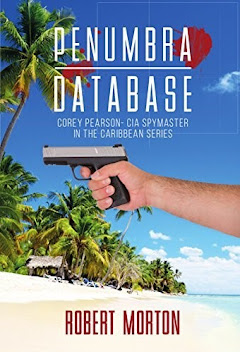
It is also the kind of environment I
explore in the fictional Corey
Pearson—CIA Spymaster Series. Corey Pearson and his elite CIA team
cooperate with Canada’s Canadian Security Intelligence Service, CSIS, to
monitor suspicious activity moving both ways across the border. Information
collected in Canada can alert Corey’s team to a developing threat headed toward
the United States, while American intelligence can help Canadian authorities
identify networks operating north of the border.
The fiction reflects an important
real-world truth.
Neither
country can effectively protect this enormous frontier alone.
The FBI might uncover a criminal network in
the U.S. and discover its phone calls or messages lead into Canada. Homeland
Security Investigations might follow the money and find it moving through
several countries. Canadian authorities might spot a suspicious person before
he ever gets near the border.
No single agency sees everything.
The key is sharing information fast enough
to connect the dots before the suspects realize they’re being watched and
change their plans.
That becomes even more important when the
threat goes beyond smuggling or ordinary crime and starts touching national
security.
A back road used to move drugs today could
be useful to a foreign spy tomorrow. The same smuggling network that moves
people across the border could also move cash, fake documents or someone trying
to stay off law enforcement’s radar.
That’s the real concern: once criminals
figure out a route, a contact or a weak spot in the system, someone else can
use it too.
That is why the northern border deserves
more attention.
America’s border with Canada rarely looks
threatening.
In many places, it looks peaceful: a quiet
river, an empty country road, a forest trail or a small town where people have
crossed back and forth for generations.
But security threats often look ordinary right up until the moment they aren’t, and along nearly 5,500 miles of border, there are a lot of places to hide.
Robert Morton is a member of the Association of Former Intelligence Officers (AFIO) and writes about the U.S. Intelligence Community (IC). He also writes the Corey Pearson- CIA Spymaster Series, which blends his knowledge of real-life intelligence operations with gripping fictional storytelling. His work offers readers an insider’s glimpse into the world of espionage, inspired by the complexities and high-stakes realities of the intelligence community.


No comments:
Post a Comment