
 |
| Ten years after Iran’s missile threats, the shadow war is no longer in the shadows. From nuclear fears and Hezbollah proxies to Israel, the U.S., and the widening Middle East conflict, the warning signs from 2016 feel more urgent than ever. |
In March 2016, I was watching Mark Dubowitz on C-SPAN’s Washington Journal as he discussed Iran launching two long-range ballistic missiles. Each one carried the phrase “Israel must be wiped out” in Hebrew. What stuck with me wasn’t just the message, but the timing. Vice President Biden was in Israel then. That mix of diplomacy and open hostility got me thinking about where things could go if Iran ever backed that posture with real nuclear capability.
Ten years later, those thoughts feel
closer.
At
the time, the launch felt deliberate, and that still holds. Iran has kept using
missiles, drones, and proxy groups to send messages without tipping into
full-scale war. What’s changed is how constant it’s become. Tension with Israel
isn’t occasional anymore. It’s a steady pressure point.
Back then, I worried about what would
happen as the nuclear deal’s limits expired. Instead, the deal came apart
sooner than expected when the United States withdrew in 2018 under Donald
Trump. Since then, Iran has enriched more uranium and cut back, then terminated
inspections. Now the question isn’t about some future deadline. It’s how close
Iran may already be.
A decade ago, I also believed that if Iran
crossed a line, Israel might answer with a major strike. That fear is no longer
theoretical. Israel and the United States are now at war with Iran, and strikes
have killed senior Iranian leaders, including Ali Khamenei, while hitting
military and nuclear-related sites. The shadow war has moved into the open.
One of my bigger worries was unrest inside
Iran and how the regime might react if cornered. There have been serious
protests, but the government has held on. Since Iran hasn’t openly deployed
nuclear weapons, that fear hasn’t played out. Still, instability in a country
close to nuclear capability remains dangerous.
The hostility between the United States
and Iran hasn’t just hardened. It has turned into war. The 2020 killing of
Qasem Soleimani once seemed like the closest both sides had come to direct
conflict. Now decades of mistrust have moved from proxy fights into open
combat.
I also worried that groups like Hezbollah
were being underestimated. That concern still holds. Despite claims from Israel
and Trump that Hezbollah has been decimated, it would be a mistake to write it
off. It remains active, organized, and dangerous. What’s changed is the reach
of Iran’s network, which now works through allied groups across the region and
beyond, something made clearer after the October 7 attacks.
That idea eventually found its way into my
novel Mission of Vengeance.
In the story, Russian operatives use Hezbollah-linked cells from South
America’s Tri-Border region as a proxy to attack a Caribbean summit on Cat
Island in the Bahamas. The goal isn’t just violence. It’s instability.
A CIA team led by Corey Pearson is there
to stop a suicide bomber before she strikes. They succeed, but not cleanly. The
bomber detonates after being engaged, killing one team member and critically
wounding another. The leaders survive, but the cost is real. The point is
simple: influence doesn’t have to be direct to be effective.
The story is fictional, but the setup
isn’t far-fetched. Countries can use proxy networks far from home, which
reflects the indirect conflict we see more often now. It shows how easily the
lines blur.
I also worried nuclear material might be
diverted for a dirty bomb. That hasn’t happened, at least not publicly.
Instead, conflict has shifted toward drones, missiles, and precision strikes,
tools that are easier to use and deny.
I understood why Benjamin Netanyahu
doubted the nuclear deal. Today, that doubt is more common. Trust is thin
everywhere. Meanwhile, the Abraham Accords reshaped part of the region,
bringing several Arab nations closer to Israel, partly over shared concerns
about Iran.
Looking back, the core tensions remain,
but the situation has changed. Trump’s bombing of Iran’s nuclear sites may have
damaged the program, but it didn’t answer the biggest question: what material
remains, where it is, and whether Iran is still quietly pursuing a weapon.
With the U.S. now at war with Iran,
diplomacy has largely been pushed aside, even if Washington is still making
limited attempts to revive it.
What has changed most is the margin for
error. Ten years ago, these fears felt distant. Now they feel immediate, and
the space between stability and escalation is much thinner.
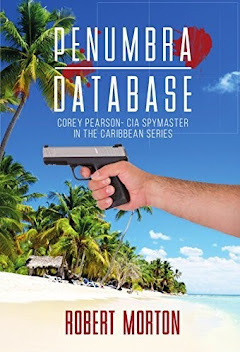
Robert Morton is a member of the Association of Former Intelligence Officers (AFIO) and writes about the U.S. Intelligence Community (IC). He also writes the Corey Pearson- CIA Spymaster Series, which blends his knowledge of real-life intelligence operations with gripping fictional storytelling. His work offers readers an insider’s glimpse into the world of espionage, inspired by the complexities and high-stakes realities of the intelligence community.


No comments:
Post a Comment