
 |
| KGB ghosts never really retire. From the Cold War to modern Russian intelligence, the old spy playbook still shapes power, policy, and global influence. |
The
Soviet Union may have collapsed in 1991, but the KGB didn’t exactly pack up its
files and go home. It changed signs on the door.
The old agency splintered into new outfits
like the FSB and SVR, but many of the same people, instincts, grudges, and
methods survived. The real story isn’t that aging KGB men are still sneaking
through back alleys with forged passports. It’s that KGB-trained officials
still sit close to the center of Russian power, shaping how the country sees
the world and how it acts on the global stage.
Take Vladimir Putin. Before he became
Russia’s president, he was a KGB officer. Later, he ran the FSB, the KGB’s
successor.
That history matters. You can see it in
the way Russia moves overseas. Crimea in 2014 is a good example. Russian forces
appeared without insignia, Moscow denied they were involved, the media
narrative was tightly managed, and by the time the truth was obvious, the facts
on the ground had already changed.
It didn’t feel like a normal invasion. It
felt like a spy operation that turned into foreign policy.
And Putin isn’t alone.
Around him are men cut from the same old
cloth: Sergei Naryshkin at the SVR, Alexander Bortnikov at the FSB, and others
who came up through that same hard security world.
These aren’t museum pieces from the Cold
War. They’re sitting in real offices, making real decisions, shaping how Russia
spies, pressures, threatens, and meddles abroad.
So no, the KGB isn’t gone. It just stopped using the old name.
That mindset doesn’t keep intelligence in
a neat little box. For Moscow, spying isn’t just about stealing secrets. It’s
about bending events before the other side even realizes what’s happening.
Elections, alliances, public opinion, street protests, cyberattacks, proxy
groups, all of it can become part of the game.
The tools are newer now but the playbook
isn’t: move in the shadows, deny everything, and keep opponents off balance.
This is where fiction starts sounding a
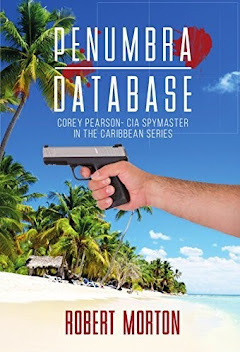
little too close to real life. In Mission of Vengeance,
former KGB operatives aren’t retired. They’ve just been moved off the books and
put to use somewhere else. This time, it’s the Caribbean, where old loyalties
and old skills are tied to a much bigger Russian game.
That idea isn’t far-fetched. Spy networks
don’t just vanish because a government changes its letterhead. The favors
remain. The grudges remain. The tradecraft remains.
The book also gets at something real and
dangerous: the wound left by the fall of the Soviet Union. To many inside
Russia’s security world, 1991 wasn’t just history. It was humiliation. They
didn’t see the Soviet collapse as freedom breaking through. They saw it as a
defeat, and they blamed the West for helping make it happen.
That doesn’t mean Putin is personally
behind every shadow operation on the map. But it does mean Russia’s leaders
often view American and Western influence as a threat to be pushed back,
whether in Eastern Europe, Africa, Latin America, or anywhere else Moscow
thinks it can regain ground.
In that world, old grudges don’t fade. They
become policy.
The novel’s storyline—where a shadowy
operation seeks to undermine U.S. presence in the Dominican Republic—fits
within that broader logic. Russia has shown interest in projecting influence in
areas close to the United States, even if indirectly. While the specific
scenario is fictional, the strategic idea behind it is grounded in reality:
intelligence services are often used to probe, test, and challenge geopolitical
rivals in places where direct confrontation would be too risky.
Another place Mission of Vengeance
feels grounded in reality is the defector. In the story, a former KGB operative
switches sides and starts talking. That’s when the curtain gets pulled back.
Suddenly, Corey Pearson sees the full shape of the operation, not just who is
involved, but what they’re really trying to do.
That’s how it often works in the real
world, too. Defectors don’t just hand over names. They expose methods, motives,
hidden networks, and plans no outsider was supposed to see.
Spy agencies live on secrecy. And when
that secrecy cracks, everything can come spilling out.
In the end, the most accurate way to
describe the legacy of the KGB is this: it never truly ended. It adapted. The
institutions changed names, the Soviet ideology faded, and the global landscape
shifted, but the core approach to power—shaped by intelligence thinking—remains
deeply embedded in Russia’s leadership. Whether in real-world operations or in
fictional spy thrillers, the idea holds up well: spycraft doesn’t retire
easily, and neither do the people who built their lives around it.
Robert Morton is a member of the Association of Former Intelligence Officers (AFIO) and writes about the U.S. Intelligence Community (IC). He also writes the Corey Pearson- CIA Spymaster Series, which blends his knowledge of real-life intelligence operations with gripping fictional storytelling. His work offers readers an insider’s glimpse into the world of espionage, inspired by the complexities and high-stakes realities of the intelligence community.


No comments:
Post a Comment